
So the E3 is almost done. I saw the EA bit, I was blown away by Bethesda where they ended the presentation with 13.2 seconds announcing the Elder Scrolls VI. A mere teaser, but what a teaser, the crowd went insane on the spot (me included). I reckon that it will be a 2019 release and we will hear a lot more after the release of Fallout 76 later this year. When it comes to Fallout 76 it will be a lot bigger than ever before. It allows for single play, friends play and multiplay. That is merely the first part, the second part is that Fallout 76 is announced to be 4 times the size of Fallout 4, so any Bethesda fan expecting to be well rested by Christmas better start buying stocks and options in Red Bull, as they will need it and lots of it.
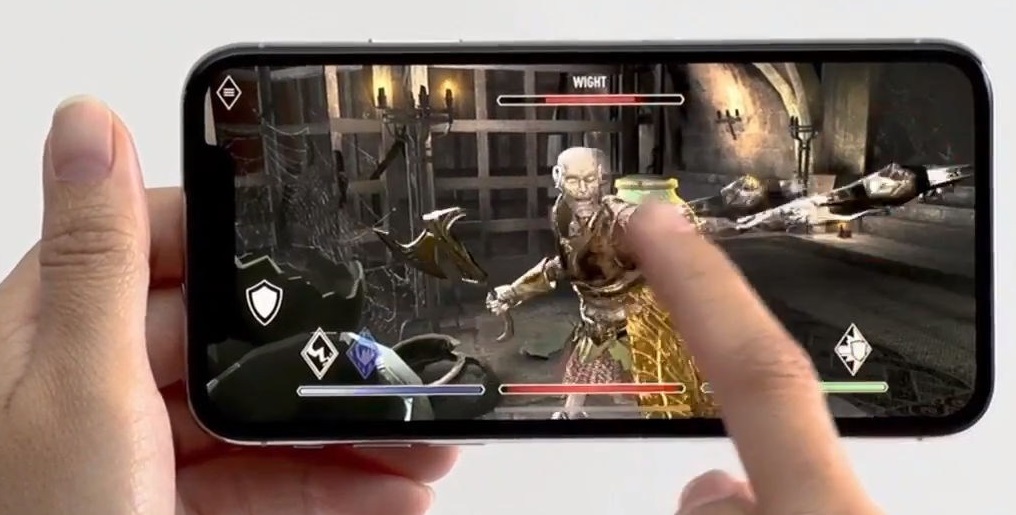 There was a lot more announced, most importantly the setting of a new free game, called Blades, an elder scrolls version of Fallout shelter, a very different one, Bethesda went one step further where the game is fully playable in portrait and landscape mode, the view on the game made me desire an immediate update to my mobile (which is falling apart anyway). In addition, Fallout Shelter became available at that point for both PS4 and Nintendo Switch. So Bethesda is not sitting still and a lot of it at no cost at all, showing a level of gamer care that we have not seen to this level before. Bethesda blew us away with the upcoming DLC’s, updates and new games. After that it was time for Microsoft. I have had issues with Microsoft and they are still growing, yet the presentation given was really good. Phil Spencer knows his shit and that of many other players in this field. He knows what it is about and as we saw all kinds of ‘world premieres’, it relied to some degree on both Bethesda and Ubisoft to give some of the goods, but that was not all. I stated it before, I am not a racing fan, but Forza 7 blew me away, it was astounding to see, so I was not ready for what happened next. If Forza 7 is set at as a 90%-91% game, the upcoming Forza Horizons 4 is getting us straight to the 100% mark. They really outdid themselves there. It is set in historical England, all of England and if you think that Forza 7 had the goods, seeing seasons and weather set into the driving, seeing every place go through the 4 seasons, you will see something totally unique and there is no doubt that if it holds up on the Xbox One X on 4K and 60fps, you are in for a treat, even a non-racing fan like me can see that this is something totally new. There were also announcements on gaming houses and developers bought as well as some of the indie developers who are showing excellent products. Phil Spencer is making waves; he is not out of the woods as he has to clean up the mess of two predecessors, so he has his work cut out for him. There was also a less nice part. They did in many cases give not any release date, merely ‘pre-order it at the Microsoft store‘. I personally believe that this is the Microsoft path, a path that was dangerous and I accused them for not being in consideration of gamers. There was more. You see, Microsoft is moving to take the shops out of the equation. They were doing it to some extent (poorly I might add), yet now when we consider Gamerpass “Xbox Game Pass launched back in June, and provides access to more than 100 Xbox One and Xbox 360 games for $10.95 per month“, before you think that this is a lot, consider that you get access to 100 games, with the announced NEW games, we got that it will include the next Halo, Gears of War, and Forza on launch day. So that is a massive teaser, yet I am also scared of the intentions of Microsoft. I have seen this before. You see, TechAU gave away the speculated goods with “selling games is no longer an option. With console hard drive storage sizes increasing to 1-2TB, its possible we need to rethink game ownership completely. The big question will be the games available. If they’re all games from 6-12 months ago, it may still be seen as a good opportunity to play a bunch of games you meant to buy, but never got around to it“, if only it was true, because they already dropped the ball twice on that one. You see, I saw a similar play in the late 80’s by The Evergreen Group, they had government backing and undercut the competition for years, after that when the bulk was gone, the prices went back up and they were close to the only player remaining. It seems that Microsoft is on a similar path and when we saw the Faststart part I got a second jolt of worry, with the stating that they used machine learning to see how gamers play. This implies the profiling of all players, so when exactly did you as a gamer agree to that? You see, when this becomes personalised, it is not about the average player, this is about you as the individual player and I personally believe that the push ‘to pre-order at the Microsoft store‘ is not merely marketing, it is about pushing for online only and take the shops out of the equation. It makes sense from a business point of view, yet you end up with the only IP, the ones they allow you to have, for whatever time you end up having it. I never signed up for that, and even if we love the offering they give for now. When the shops can no longer support this theory, what happens then? How will you feel in 5 years when your IP is based on a monthly rental? It is a dangerous part and for now you think it does not matter, but it does, you see the earlier quote ‘With console hard drive storage sizes increasing to 1-2TB‘, yet the Xbox One X is merely 1TB, so there is that already, then we realise that the 1 TB merely gets you 800 GB (OS and other spaces reserved), so now we see that the previous Gears of War was 103.12 GB, implies that with one game installed, you are down to less than 70%, now add Halo 5: Guardians (97.53GB) and Forza 7 (100GB). So, only 3 games and 50% of the total drive space is gone (those mentioned games were the largest ones).
So when I see the mention of space for 12 games, I wonder how correct it is. Now consider the announced games like Fallout 76, the Division 2, Beyond Good and Evil 2 and wonder what will be left. People will wake up much to soon as they have to reorganise their console drives, way too early in 2018. Consider, not just the games, but the patches as well. Now you start seeing the dangers you as a gamer face. The moment that 120 million gamers start working in an online setting (PS4, XB1 and Switch), how long until the telecom bandwidth prices go up? How affordable will gaming remain? For now it looks great, but the bandwidth fountain will be soured, the impact is not short term when it hits, and the impact will be too great to consider for now and the Telco companies have not even considered the dangers, only their option towards optional revenue. There is supporting evidence. In Australia, its fun loving product called NBN had 27,000 complaints last year alone. If the old setting for every complaints 5 people did not bother, we see a much larger issue. With issues like outage and slow data speeds one number (source: ABC) gives us that at present the growth of 160% of complaints ‘equated to 1 per cent of the activated premises‘, how is that to sit in whilst downloading 100 Gb for your Xbox One X, and that is merely Australia. In places like London in full setting congestion will be a normal thing to worry about. So when we see “Julie Waites said her 85-year-old mother Patricia Alexander has been without a working phone at her Redcliffe home, north of Brisbane, since June when the NBN was connected in the area“, which we see 4 months after the event, there is a much larger issue and Microsoft did not consider the global field, an error they made a few times before and that is the setting that gamers face, So when your achievements are gone because for too long there was an internet issue, consider where your hard earned achievements went off to. I am certain that it is not all Microsoft’s fault, but its short sighted actions in the past are now showing to become the drag regarding gaming.
The one part that Microsoft does care about is its connections to places like Bethesda and Ubisoft, who in their presentation show to be much larger players. We get that this is merely beta and engine stuff, but the presentation of the Division 2 rocked, I am not sure how the Crew 2 will do, but it looked awesome, in addition the EA games looked as sweet as sport games can get on the Xbox One, so they have the goods. Phil Spencer is making waves and he is showing changes, but how trusting will this audience remain to be after a mere two incidents where gaming was not possible due to reasons not in the hands of Microsoft? Their support division stated last year that the uploaded data from my console (not by me, were all the responsibility of the internet provider), are you kidding me? Yet the games do look good, there is no denying that, yet their infrastructure might be the Achilles heel that they face in the coming year. There was also time for the upcoming AC game called Odyssey. It is very similar to the look of Origin in looks. Graphically it is stunning. The view also shows that AC is changing; it has a much larger political impact in the story line and the changes you can make. It is a lot more RPG based than ever before, which as an RPG lover is very much appreciated and with the choice of a male or a female player is also a change for good, unlike AC Syndicate the choice will be for the duration of the game, making it a much larger replayable challenge. The demo shows that there definitely are changes, some are likely gamer requests, the rest seems to be a change to make the game more appealing regarding the play style you choose, but that part is speculation from my side. I would want to be cautious, yet they truly took the game to the next level with AC Origin, which makes me give them the benefit of the doubt. The setting that Ubisoft brings is much stronger than last year, so it could end up being a stellar year for Ubisoft. When we get to Sony, I become a little cautious. Yet even as we saw it in the previous presentation, instead of merely presenting titles, having live music on stage, the music from the games was a really nice touch. I do not know about you the gamer, yet I have been more and more connected to the music as the quality of it has been on the rise, so seeing the performances was well appreciated. It might have started as early as ACII and Oblivion, now we see that good music is a much larger requirement in any game. A much darker the Last of Us 2 (if that was even possible) sets the stage for what is to come. Yet, even as we see awesome presentations of what is to come, I have to admit that Microsoft did have a better presentation. Sony is also playing the ‘store’ setting with PlayStation Store for bonus options. The games are overwhelming and those are merely the exclusive titles. When we consider all that Ubisoft and Square Enix bring to the table, it shows to be a great year for all the PlayStation owners. Yet, the overwhelming advantage that they have over Microsoft is not as much as you would think. The question becomes how heavy the overbearing advantage that the Last of Us 2, Ghost of Tsushima and Spiderman have, yet when set opposite Forza Horizon 4, Halo Infinite and Sea of Thieves I wonder if it remains a large advantage. Sony has more to offer yet the overwhelming exclusive benefit is not really there. So when we look at a new Resident Evil, actually a remade version of Resident Evil 2, we remain happy for the ‘unhealthy’ life diminishing gaming treats that are offered; both consoles will be offering gaming goods we all desire. There is no doubt that gaming revenue will go through the roof and it seems that we are in a setting where games are not just on the rise, the predictions are that they will grow the market in nearly every direction, and we still have to hear from Nintendo, you see that one is important for both Microsoft and Sony. There is little doubt that they will surpass the Xbox One in total sales, yet now it becomes the setting where they might be able to pull this off as early as thanksgiving, a setting Microsoft is not ready for, the ‘most powerful console‘ will optionally get surpassed by the weakest one as Microsoft has not kept its AAA game for close to two years. Three simple changes could have prevented that, yet the view and setting of always online, GamerPass and storage destroyed it, the mere consideration of infrastructure was missed by Americans focused on local (US) infrastructure and forgetting that the optional 92.3% of the desired customer base lives outside of the USA. The simplest of considerations missed, how is that as a hilarious setting? Oh and getting back to the Sony presentation, if you thought God of War surpassed your expectations, it seems (from the demo) that Spiderman is likely to equal if not surpass that event, so there is one issue that the others will have to deal with, the PlayStation players (Xbox One players too) will just have to wait and be overwhelmed with the number of excellent games coming their way before Christmas, because for both of them the list seems to be the largest list ever. I am posting this now and perhaps update a few Nintendo settings, as there are several revelations coming. GeekWire gives us in all this “Microsoft’s Xbox One still faces an uphill climb vs. Sony and Nintendo“, yet the article (at https://www.geekwire.com/2018/e3-2018-analysis-microsofts-xbox-one-still-faces-uphill-climb-vs-sony-nintendo/) misses out. You see, even if we are to agree with “Microsoft has effectively made its own console irrelevant, because even with the Windows Anywhere initiative, there’s no particular reason for a dedicated enthusiast to own an “Xbone” if you already have a PC. There are certainly advantages, such as ease of use, simplicity of play, and couch gaming, but the same money you spend on the Xbox could be going to tune up your computer so you can play the same games in a higher resolution“, we see the truth, but a wrong one. You see ‘the same money you spend on the Xbox could be going to tune up your computer“, is not correct. We need to consider “you can find a large number of 3840×2160-resolution displays in the $300 to $500 range“, as well as “For a better 4K experience, look to the $450 GeForce GTX 1070 Ti, $500 GeForce GTX 1080, and $500 Radeon RX Vega 64, though the Radeon card is still suffering from limited availability and inflated prices. These cards still won’t hit a consistent 60 fps at 4K resolution in the most strenuous modern games“, so you are down for a lot more than the price of the Xbox One X and still not get the promised 60fps that the Xbox One X delivers. And that is before you realise that a TV tends to be 4 times the size of a PC display. The biggest issue that has not been resolved is the mere stupidity of 6mm of space, that allows for a 3TB Seagate BarraCuda, it would have diminished most other issues, now merely evolve the operating system requiring people to be online all the time and Microsoft would have created an optional winning situation. It should not impact the need (or desire) for GamerPass and it would change the curve of obstruction by well over 70% overnight, all that when you consider that there is a $65 difference for 300% storage, something that the 4K community needs. Phil Spencer has one hell of a fight coming his way and if he can counter the Microsoft stupidity shown up to now, he could potentially turn the upcoming number three position around in 2019, making Microsoft a contender again at some point, yet if the short-sighted board of Microsoft is not willing to adhere to some views, they will lose a lot more than just the loss of a few hundred millions of console development, they might lose a large customer population forever, because gamers hold a grudge like no other and if it was not merely the cost of the console, the fact that the games they bought might overtake the total amount spend by close to 3:1, and once gone they will never ever return. That is the stage we see now and even as there is a lot of improvement, where it matter no changes were made. So even as we should all acknowledge that Phil Spencer is a large change for the better, Microsoft needs to do more. They have the benefit that Sony gave a good show, yet not as good as Microsoft. Perhaps the live presentations are the E3 part we all desire, the demos and previews were all great on both systems. In that regard Ubisoft and Bethesda both brought their homerun at the E3 and they are well deserved ones. As both deliver to both consoles there were no losses on either side, only wins for both sides, yet that leaves the small devil in my brain considering the question. If Fallout76 is 4 times the size of Fallout 4 which (according to Eurogamer) ‘required 100GB install sizes as a minimum‘ for 4K. So how much more will Fallout 76 need? It is in that light that we need to look with a 1TB drive, something I saw coming 5 years ago. So now, whomever buys a 1TB system will soon (too soon) stop being happy. That is one of the fights Phil Spencer will face soon enough, an issue that could have been prevented 6 years ago. It is so cool to see all these games coming, whilst we see a storage system supporting merely part of what comes and that is before we see the network congestion as a few million people try to update their game and get access to the networking facilities. It was an issue that haunted Ubisoft with the initial Division in 2016. When we saw ‘I’m still at work, had to stay overtime and I’m really salty because I might not even play today because of all this server downtime‘, I merely stated that they could have seen that one coming a mile away. Ubisoft upgraded everything and I do not expect to see this in the Division 2, yet consider that it is not merely one game. Consider every gamer getting issues when they want to access Gears 5 and Halo Infinite on launch day. That is the issue we could see coming and in all honesty, in most cases it will not even be the fault of Microsoft at all. The evidence was seen in Australia merely a week ago when ABC treated us to “NBN Co chief executive Bill Morrow suggested that “gamers predominantly” were to blame for the congestion across the National Broadband Network. He later clarified that he wasn’t blaming gamers for congestion, but reiterated that they are “heavy users”“, that is the reality setting, where Counter-Strike: Global Offensive and Destiny 2, two games are 49% of the average hourly bandwidth usage, now add Fallout 76, Gears 5, the Division 2, EA Access and Microsoft GamerPass. You still think I am kidding? And that is merely Australia, now add London congestion and when we consider some news sources give us: “London, Singapore, Paris and New York taking top spots when we consider internet congestion“, I reckon that Europe has issues to a much larger extent. When we consider in addition that the Deutsche Welle gave us last January “A new report has found that only a small fraction of German users get the internet speeds that providers promise“, as well as “the problem is only getting worse“. That is the setting Microsoft is starting to push for and the gamers will not be enjoying the dangers that this will bring. Certain high level non thinkers at Microsoft are making this happen and now Phil Spencer will be faced with the mess that needs cleaning up. The part that many have been ignoring and it will hit Microsoft a lot harder, especially when it wants to move away from uphill battles, a sign that we cannot ignore and whilst the plan might be valid in 4-6 years, the shortage that the hardware and infrastructure gives at present will not be solved any day soon and that is counting against Microsoft. The impact will hit Nintendo as well, but not nearly as hard. The evidence is out there, yet some analysts seem to have taken it out of the equation. Is that not an interesting view that many ignored?
So we are moving forward in gaming, no one denies that, but overall, some cards (like always online) were played much too early and it will cost one player a hell of a lot more than they bargained for.


