It’s about time, slappers only

Even as we look at games, play games and even improve games, we all tend to have our own idea on how things should be. So I decided to take a look in another direction, I decided to look at the Unreal Engine (Unity too), on how to make a game. To be honest, I have no plans to create a game, even though I have a few ideas on at least one original IP, I feel out of my depth on creating the game myself.

So why look at these engines?

I noticed whilst I was observing someone else making a ‘game’ and introducing people on how to make a game, I noticed that my mind wandered into how that applied into my own IP. It also gave me the additional ideas on how to evolve gaming (my IP) and give the player something new, something they have not played before; more important, a version of view that has not been done before, which in light of all the games out there is quite the statement to make. Even as some effects seem familiar as we have seen different visions in games like Splinter Cell (night vision, thermal vision), what can you do to gaming when you do not get to have a choice? What if your evolution also brings with it changes in how you see things? It was an interesting view that we saw (read: read about), in Infocom’s Suspended. It was my first Infocom game (CBM64) and also the only one where I actually had to buy the hint guide for (came with a marker to make invisible statements visible. So as we took control of Iris, Whiz, Waldo, Auda, Poet and Sensa, we saw something different as all of them looked at the same thing. That idea was pretty interesting to read about, yet what happens when we ‘see’ the difference? That was the first foundation of a new title. The second part came from a memory of a game called Mercenary (Novagen). There were the Palyar and the Mechanoids, now what if they were one and the same (a Dark Chrystal reference), what if we have a game where the environment forces us (not allows) for evolution from one to the other, yet also with the setbacks that one or the other has. A game where you can choose to go one way, go the other way, yet gives us the puzzles and challenges that does not merely make it a fun game to play; it would in addition also give us a challenge that makes the fun of replay much higher. As an RPG fan, the option to replay a game is important to me for the mere reason that if I am able to buy a game at $100, I would like to be able to play it several times, or as they say in Fintech, if you can squeeze a $10 bill and you get 11 $1 coins, only then have you maximised your currency. I can do that to games, so hence the stage to create something that is a great return on investment.

So as I am looking at these Unreal Engine presentations, I am seeing all kinds of changes that could make the game even better, more challenging and more fun to play. I am now also seeing a few things that I had not actively considered to the degree that I needed to consider it. After merely seeing 3 hours of presentations, I saw half a dozen items that added to the thoughts of the new IP I am ‘creating’. So what happens when you are in one stage? You want to be in a stage where you can have two challenges without repeating the methods. It is almost an Alien versus Space Marine part, but not the same, the difference is still there, yet in another way. The best example is seen in the original Daredevil with Ben Affleck. So what if our view is based on some version of: ‘sonic plus’? This was merely one of several iterations my mind was going through to set the stage of the game. And just watching the run through gave me additional idea after idea and as such, my version of this non existing game kept on evolving.

Why do we care?

Well, you might not, yet consider the elements I came up with, it seems that it is not entirely unique, yet the version I have has to the best of the knowledge never be seen and if I can come up with this, why de several development houses work with a new version of that same Franchise again and again and we see a total lack of actual original new games. What makes for a game to be squeezed in repetition with a larger lack of new IP? It seems to me that certain houses have been lacking in true new IP and that seems like such a shame. If a gamer is depending on something new, not something relaunched, we see the flaw that is out there, and in that same light we see the growing desire of golden greats like System Shock. Do not get me wrong, I loved that game and I hope to play the remastered edition when it is done. More importantly, it also gave me other ideas on how to resolve play value. You see, in System Shock, what was working had to be destroyed (camera’s) systems had to be switched (VR Cyberspace level parts). Yet what happens when you have to get it fixed. Not some blatant ‘repair tool’ that shines on the object. No, what happens when you have to scrounge systems to find parts to rebuild a server, strip tools, strip consoles to get the keyboard, the display and the processor system? Get to the router and then get to the server? We seem to think of such elements too easy. So what value do you get when you play the game in hard core mode and you have to set the stage to repair network access systems? You might only have to do it once, but there we get the additional choice of fixing a system, versus stripping systems to create a mobile version. Now what additional solutions will we see when it goes beyond merely network. In System Shock it is on a space station, so water, environment and other elements would optionally be broken and that is how I saw my new IP, not merely fixing and scrounging, but the fact that in any biological disaster we see the impact and limitations of a dangerous zone. Now, what if that is not set straight, but could alter from game to game? New routes, now solutions and other options would need to be found to get to a certain stage, in addition, as we change those parameters, the steps to do certain things will also alter as to where and when we choose to make changes and that too adds to the challenge.

A next stage

So what happens when we take that to a new level? What if we consider Watch Dogs 4 (three is being made now)? What if the setting of the stage is completely out of our comfort zone? What if we impose limits on ourselves? How willing are you to go into true survival RPG when it is not some irradiated mess (Fallout series) or Post-apocalyptic (Horizon Zero Dawn). How ready are you to be a real gamer and in the game you ended up in Korea or Japan and that game is all Korean or Japanese? Will you fold or rise to the occasion? In my view in Watchdogs 4, you and your sister/brother escape from people smugglers and you swim ashore to end up being in either country. Having no knowledge of the language, in Seoul or Tokyo and the introduction leaves you with a clean smartphone and Google glasses. Now you have to get the software, use the glasses to translate signs on the go, you need to learn language and you need to figure out how to get another party free (who is still captive somewhere). You get to choose on a criminal or non-criminal lifestyle all with its own challenges of work, odd jobs, a place, food and other elements. Can you complete both sides whilst also freeing your parents and not set of the alarms that running to the police will get your parents killed? Now consider doing that in a completely set city (a 900% version of the Watchdogs 2 map), also consider the elements that can be added, additional challenges and a true evolved NPC stage of interactions. I got part of the idea when watching the YouTube channel Only in Japan * Go (at https://www.youtube.com/channel/UCDsvL48jluG3tvlyurB4K3g), what if the interactive part is truly AI driven and it has a lot more responses than we have now (like 5,000% more). A stage where time is more important, not merely a day rotation where 30 minutes represents 24 hours, but where time is closer to actual and the game will have constraints in time management. We have seen elements of what I described here and there, yet for the most we have never seen them all united and when you are in a game that should last you 100-150 hours of gaming to complete. Taking the stage forwards by adding long term playing challenges, with the essential need to avoid grinding we see a new stage in gaming, a new stage in RPG, even as we see the truck load of people being anti-Bethesda for now. They did make a huge change and even as there is an essential need to patch the 34,554 bugs and glitches (a mere speculated rough estimate), we are looking at a game that is more about survival than the series have ever added before. We see the option to push a similar evolution into the Watchdogs series, where survival becomes an issue when we are no longer in our element; also we are no longer in a place where we can just walk around. The option to show new technologies and add technologies in a new light, where a device like Nudle Glass, could translate any sign we see in the game by adding a text balloon with the translation. where the phone will do voice translation and we add mobile technologies where we start getting the ability to hack, the ability to interact and the ability to emboss the storyline and challenges. A place where you need to get the odd job (on a food market, a market or just some courier job) where you get the cash to get by for the daily cycle whilst still having to find a way to safe your parents. More importantly, a stage where you have to get it done within a certain time (250 days for example) before their health gives out, these are all stages that we have seen before, yet never all at the same time and not to this extent. We need food and water (the one real fault in Subnautica), yet when we are given hours to get things done, we see options to stretch a game in more meaningful ways. the need to get transportation and to get on public transport as we cannot run from one end to the other (like in Watchdogs), as we have to get from one place to the other in Tokyo (or Seoul), yet when we have to get by 13Km to do that, time becomes a factor and that is the part game makers ignored because they lived by the act that all of it had to be fast and dynamic, yet the longer RPG game could benefit from the additional challenge of getting transport and learning to find your way by public transport (time skipping). It is not merely for the challenges and the storyline. You get to be part of the environment; you will need to clearly think on your feet. We might have been able to forego sleep in Fallout 3 for 200 days, yet the need for sleep will be here (even if we skip it in a few seconds wait time), we impact the other elements and when time becomes a deciding factor in the game we get a more true survival game. In opposition of Elder Scrolls (Oblivion or Skyrim) where we loaded up al every mission we could, making time a factor means that we need to focus on a mission. Even as we need not consider time for everything, we get to have a time driven to do list, affecting the way our NPC’s regard us, as we miss the deadline for jobs.

We also get to consider how we survive, not only is making the wrong enemies a much larger concern, adhering the game to, for example, Japanese law where they have ‘No one shall possess a firearm or firearms or a sword or swords’ gives new needs for being creative. The Thunder ball in WD2 was extremely innovative, in WD4, we might resolve to set the stage for a walking cane, or perhaps a belt (strangling). By adding the locations realism in practise, we also create new solutions towards game play. We can still use the WD hacking weapons, yet now we add new elements to the challenge. We might think it is not cool to be unarmed, however when we consider the reality of ‘Japan has some of the world’s strictest gun control laws with punishments that even scare gangsters‘, when we see that, the need for creativity makes the entire enterprise more rewarding too. I hope we can all agree that opening vents via remote in WD2 was as lame as it could get, the challenge can still be met in other ways. So when it is no longer about the killing, but now it is about creativity (like collecting data) we create a new kind of survival game, an entirely new challenge and is that not what gaming is about? When it is not about dropping bodies; when the stage becomes about paths that are about industrial espionage, true surveillance and getting the wealth that could purchase freedom, or perhaps the paths that will expose the people holding your parents, we see applied creativity in another way. We open the door for people to find another way to get to the end and that journey is open for anyone, yet by making time a new constraint and a more truthful constraint we see that people will try to adopt ‘glitches’ when that fails (and it should), we end up getting a real gamer and the game that does that changes the dimensional view of anyone playing a game. When the silenced scope is not available, when the knife gets you years in jail (parents dead, end game!) we can start looking at what we can do to give the challenge of a watchdog. You see, a watchdog is a person who ‘warns members of the community when potential or actual problems arise‘, we saw that to some degree in WD2, running all over San Francisco, yet we can take it to a much larger scale. When the game allows for the criminal side by data invasion, corrupt journalist devices and hack police terminals, or do the opposite by resolving hacks, by deleting criminal data bases and transmitting video of criminal activities in the game, we can become rich, famous and well known or have both worlds by getting a second identity and do both. If we can set the stage of double dipping and we can also create the stage where we can be found out playing both fields and as such impede progress, angering both sides of the social isle; we get a much larger scale to play with and a much bigger challenge. It makes the game more rewarding when we replay the game.

Is this a good idea?

Most likely in this shape not. It needs work and we now have the resources to take it to this level, yet most software houses have not shown the willingness to take it this far (exception Ubisoft- Far Cry 5 and Bethesda- Elder Scrolls), and a lot more is possible. You merely have to look at Horizon Zero Dawn and how much further it could go is a clear indication of what might be reached. Having the map online is one solution (Fallout 76), yet when we realise that in Horizon Zero Dawn is in a scale of 107.5:1 (in miles) compared to real life. What if we see a game where it is less than 10:1 (1:1 being the optimal solution), what other parts will you open? Not merely a place like Tamriel with suddenly the space for 24,999 additional locations, but the stage where we actually need to keep mind on mapping to find the location of Telepe, we see a new challenge added to it all. The nice part is that we can still scale according to level of gameplay, having from easy (90:1) towards hard-core (1:1) we get a game that is not merely more challenging, we get a game that no one has seen before, it needs a true new approach to skills, levelling, completing and time that changes the game. The nice part we saw in Fallout, is where we in Survival (hard-core mode) we see the one life part as well as the absence of fast travel. We see them all as interesting challenges to try, yet when we add them all together we create an entirely new level of gaming. The PC has been there for some time, and with their drives installing it all to the drive is a breeze nowadays (one Blu-ray for the map, and one for the game) For consoles it is a different matter and one that needs work, optionally requiring an online connection for single play, where all the other players will work from an ‘image’ of the same map. No matter how we slice it, the players and gamers are all ready for a new level of gaming.

The downside?

Well, there is no real downside; there is an additional challenge of avoid the mistakes we see in AC Odyssey. Several sources give us: ‘Lots of level grinding‘, ‘Repetitive missions‘ and ‘Long load times and stuttering‘. The last one is a technology issue and should be resolved; grinding needs to be avoided at all times, yet at times will be there. If your daily routine requires income, we get grinding to some extent and food and rent, yet when you pay rent every month, we need to find the week to get through, whilst getting paid in the process. The challenge is to keep grinding to a low. when we see the comment ‘Simplistic combat’, we accept that in some cases, yet when we are in a game where combat is to be avoided and reduced to slappers only (pugilism), we still get a decent challenge if the AI is good enough. In addition, as I see it I want the gender to set the stage for entirely different play throughs, As the girl you have retail options, and also a stage where invitations to the right party places could offer all kinds of opportunities, yet on the criminal side of the game, it might not be so rewarding. To overcome (in a creative way mind you) on how we can add no less than 5 dozen ways to get income (two dozen of one and 36 of the other), we have the setting for not merely an achievement, depending on where it is, we might set a financial stage, as well as a social stage that opens up location (housing opportunities) to shift the range of time requiring to be spend doing one or the other.

When we approach that part, the game becomes bigger, not more tedious. Some might say that if there is no kill score, there is no game and perhaps those people would feel better moving to Detroit, yet in light of any RPG, is violence required? I never did it myself, yet some have played and finished the game in pacifist mode. I admire that as I never considered that in the first few play throughs. Those are defining moments in gaming, when you go out and try that one option you never tried. When you are merely left with the MacGyver placement to get the dough you need for next month, how can you apply it in enough ways to avoid getting the ‘grinder’ label?

In light of the AC Odyssey reviews that might be the larger challenge, especially when you want to equal or even surpass the 150 hour game challenge. I particularly like the Watchdog setting as we get to explore new ways where technology is pushing the envelope of gaming, not the hardware, but the devices in the game. When we need to evolve the software in the smartphone used to get better at hacking, get more in receiving and skim more from people, how can we do this in creative ways? As the locations change and we see that in ‘richer’ places we see more NPC’s with RFID protection, how can the player still get by? In WD2 we merely got the apps and that was it, it was an opportunity missed. Several apps had the potential to be upgraded to a ‘better’ version. When we see that in action, we can contemplate what foreign refugee life in that new place could be. Push beyond the apps and elements like health tags, domotics, smart monitoring, entertainment hacking for students (extra income in game), so many options to add to the game. At some point the question becomes, will that much data break the game?

The other way round

The largest issue we see in many RPG games is that linearity is an issue; Infamous Second Son is the best example. It starts truly great, yet when you get to Seattle it becomes as linear as a ruler and even in hard mode it is not a real challenge (apart from the third boss). To avoid that we can do what they avoided in Horizon Zero Dawn. There (in my personal view) the Tallneck had too much information; it is an equal flaw in the AC series. What if we change it so that some sets have some types of information (not unlike the server hacks in WD1), yet other information like food, shops, are found in other places. What happens, when we need some version of Yelp for one and a WD version of Lifull (Japanese rental app) for another part? Why did they not use a much larger App Shop tool, where apps had advantages and disadvantages and you can only use one, giving a new challenge in the game. You see we can use it as a benefit and a limitation. We get the benefit of one, whilst losing out on the other (luck becomes a factor) and if every game tweaks these elements (like rental prices, income per hour) we take a risk in using the same solution, diversifying the choices we make, enhancing the replay option.

Every time the ship sinks

It is an old joke, yet did you imagine in 1997, that watching Titanic (preferably in IMAX) had a different outcome when you watched it the second time? It might not work in the movies, in gaming it will. When we are confronted with a new challenge and we can reset the parameters, we can add a chance that some actions happen, making the rush towards a goal more urgent and by moving from easy to normal or even survival some chances increase. It gives two parts, the benefit that you are truly challenged and the stage where there was no chance to win (like in Shanghai, when you end up having two identical stones on one another), we can try to avoid the chance, yet should the chance be zero?

RPG & Realism

I added the no guns part earlier not because I like it that way, but because I admire the option of the pacifist path, it adds to a game, so we can still have weapons, we can still use them in the equation, making the penalty and danger a lot larger if caught. Yet having a weapon and especially in the far east where we all think that life is incomplete without Katana or Geom, we see all kinds of options to enhance the game and gameplay. Yet in my mind WD4 should be much stronger on technology, hacking and devices, maximising what we can do with them. It was pathetic in WD1, yet in WD2 we saw a really nice boost, we can however do a lot more than it had and we should push for that. At present there are a whole host of actual hacking apps. iRet, netKillUIbeta, iWep Pro, Myriam iOS Security App, iSpy, Hopper App, Cycript, Frida, Firecat, Highster Mobile, et al. What if there is a Watchdog version of some (or all) where we have to rely on other means to get information to get further in the game? We can have one to three apps that have these abilities and as we get access to another app, we can evolve one of those three to give us more hack power. In addition, the merging of app and stealth gives us more time to get what we need before we are blocked (an income limitation). So as we go forward we get challenged more. We could just go Fred Flintstone, bash the person hack the phone an walk away. Getting more initially, yet also getting loads of infamy from the boys and girls in law enforcement blue.

All options that would have been available, yet the present RPG lines never truly pushed the envelope, it seems a little bizarre. There is no way of telling how popular any RPG game gets, yet when we see that the greatest foes are ‘repetition’ and ‘grinding’, it seems odd that some of my ideas were not there in WD2, as it was something we could have seen coming a mile away.

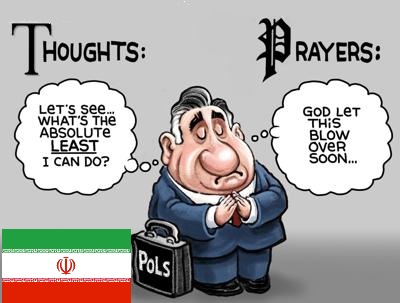
This might not have been interesting to anyone but gamers, yet when we see how the US is seemingly angering Iran and Saudi Arabia to an equal degree, do you really want to wake up and drink coffee, or play a video game and hope that after 4 hours it was all merely a bad dream? When we consider the dozens of additions that took less than a few hours to add, against the fact that some of these games have been out since 2014 and sequels in 2016. Is it not interesting that so much of the same is shown to gamers? Not merely Watchdogs (Ubisoft), Fallout (Bethesda) could have made additional usage of terminals, writeable holotapes and other bits as well, between 2008 and 2018, we saw 3 products and we see forward momentum to a decent degree, no one is debating that, yet how much more could we have seen? When we see in regards to Far Cry 5 ‘it’s very much More of the Same‘, should we fear the beginning of iterative gaming? I can tell you now that this would be a really really bad thing. We went from Forbidden Forest (1983) to Tekken 3 (1997), which shows a 1000% improvement in all directions, yet when we consider Tekken 6 (2007) and Tekken 7 (2015) we are for the most merely confronted with better graphics and the list of games with a similar issue is growing rapidly. A truckload of gaming leaps all ignored for a few reasons I gather, so in my view there is too much wrong and the fact that we are confronted with Forbes asking “is it fresh enough, or is this just another Ubisoft open-world game checking off all the boxes?” and the fact that Metacritic gives us 78% rating for the game. When you consider that the game had a budget between $80 and $130 million, and a 78% score, we need to worry. Ubisoft might not care as some claim that it made over $310 million in the first week. Yet, if we consider that it could have been a 90% game, is this a stage where Ubisoft missed out of an additional $150-$200 million? There is no way to tell and it is highly speculative from my side. In this I am not hammering Far Cry 5, merely using the most visible example. Is one a sign of the other and as such is it also a sign of iterative game development? It is an important fact and one that needs investigation as the game in gaming is set for more and higher budgets. As gaming was set to a $108.9 billion stage in 2017, and as the predictions given to us, that in 2020 $20 billion more will be made, is it not important to maximise that as much as possible? Especially now in a stage where too many are on a tight budget, relying on Black Friday and Week 12 discounts, getting it right as much as possible will be adamant in getting the larger chunk of that $120 billion pie.

When we (speculatively) see that ‘more of the same’ is part of the 78% rating, a diversified game is becoming more and more important. Some might not care, others might oppose, yet when we see that GTA5, a game (not my style of game mind you) that some regard as perfect as a game can get, that game made $6 billion, my case is, as I personally see it made.

If some are to be believed, there is the idea that 2020 would be the year of GTA6, with the view as is, there is every chance that every owned of GTA5, will get GTA6, implying that all the other game makers will vie for the additional budget left for gaming. In that stage, as I personally see it, they will not spend it on a game that is more of the same, so the other game makers will have to consider upping their development ante by a lot.

Whatever comes out then will also require extremely serious testing, as the people are getting mighty annoyed with the amount of huge day one downloads they face.


1 Comment

Filed under Gaming, IT, Science

Hammering Facebook

The Guardian has another story, which was updated a mere 6 hours ago. To be honest, I am a little ticked off. I get that the Guardian is giving us this and it makes perfect sense, it is news. Yet when I see ‘Fake news inquiry: Facebook questioned by MPs from around the world – as it happened‘ (at https://www.theguardian.com/technology/live/2018/nov/27/fake-news-inquiry-facebook-to-face-mps-from-around-the-world-mark-zuckerberg-live-updates), whilst in the same setting we see newspapers ‘hiding’ behind ‘from an unnamed source’, when we get blasted by well over 64 million results in Google Search on the death of a journalist that close to nobody gives a hoot about, the entire ‘fake news‘ seems to be nothing more than a targeted sham to me. Not the element of fake news, I get that, but some of the players are a little too hypocrite to my liking.

So let’s take a look at a few of these issues we see (at https://www.theguardian.com/technology/2018/nov/27/facebook-fake-news-inquiry-the-countries-demanding-answers).

Ireland: “The Irish government is reviewing proposed legislation to promote online safety amid an outcry that tech companies are unable or unwilling to tackle harmful content. The move jars with Dublin’s normally effusive support for tech companies with an Irish base. Facebook has its European headquarters in Dublin and falls under the remit of Irish data protection authorities“. The first thing to do is look at the definition. The European commission gives us: “Harmful content, is authorized material subject to distribution restrictions (adults only, for example) or material which some users may find offensive even if, on the grounds of freedom of speech, there are no restrictions on publication.” First of all, the Pornhub site is freely available to every man, woman and child. In addition there is a porn version of YouTube that is also freely available, from that we can see that Ireland has a lot of other worries and these two are not available through Facebook. When we look at Ireland we see a nation that given in to big business through tax laws at the drop of any hat and they have harmful content issues? In addition the Times gave us on November 6th: “Google and Facebook will call on the government today to define exactly what kind of content a proposed digital safety commissioner would have the power to remove online.” It becomes a lot more entertaining when we see in Fine Gael last week: “Fine Gael TD Hildegarde Naughton will travel to Westminster next Tuesday (November 27th) for a meeting of the International Grand Committee on Communications”, as well as ““Social media companies cannot hide from the genuine concerns of national parliaments from around the globe, it is imperative they engage with us in a meaningful way. “This document sets out a blueprint for how that can be done.” It is entertaining as she seemingly has a document whilst this entire setting has been going on for years (even before Cambridge Analytics). That entire meeting is in my personal opinion as hollow as it sounds. All trying to look important, yet where is that so called document from Hildegarde Naughton? It does not seem to be on the HN site (at http://www.hildegarde.ie), so where is it? When we are told: ‘This document builds upon the work done by the Oireachtas Communications Committee‘, we should be able to read and scrutinise it. You see, the Irish Law Reform Commission has a 2016 document (at https://www.lawreform.ie/_fileupload/Reports/Full%20Colour%20Cover%20Report%20on%20Harmful%20Communications%20and%20Digital%20Safety.pdf), it is merely that or a continuance of that? And this document is important, especially on page 165 where we see: “The definition of “communication” implements the recommendation in paragraph 2.53 that the proposed legislation on harmful communications should apply to all forms of communication, whether offline or online, analogue or digital, and therefore the definition includes communication by speech, by letter, by camera, by telephone (including SMS text message), by smart phone, by any digital or online communication (including the internet, a search engine, a social media platform, a social media site or the world wide web), or by any other telecommunications system.

This now implies that art is now no longer merely in the eyes of the beholder, basically if any art is regarded as harmful content, is comes under scrutiny (read: censoring) A massive part from Facebook is relying on art to propagate via digital medium, digital art is still in its infancy and it seems that this offends Ireland in the broader view it has, it is in that view that my message to Hildegarde Naughton is seen (at https://www.independent.ie/irish-news/courts/priest-who-sexually-assaulted-girl-6-during-first-confession-avoids-jail-due-to-old-age-and-health-problems-36840577.html). When we contemplate that when you have health issues and you are old, it seems fine to rape a six year old. It is all in the nuance, is it not? So, what will you do when you consider this Grigor Malinov painting to be harmful content? Add a Jade Swim bikini with a brush and a fashionable colour? In light of what certain people get away with, the entire harmful content is not a joke, yet hammer Facebook with it, whilst there are other players openly in the field is too weird as I personally see it.

Then we get a Turkish advertisement variant with ‘MPs do not intend to publish Six4Three documents today, Collins says‘, either you have the documents and you inform the public, or you go home and polish your silverware! You scream fake news and leave the audience in innuendo and what I personally perceive as intentional miscommunication, and haven’t we seen enough of that?

Blame Canada

I can’t resist, whenever I see a Canadian flag, a Canuck or anything Canadian I think of that South Park song. It’s nothing negative, I think that Canada is awesome in hockey, it seems to have great people (several attended UTS with me) and it seems to have a healthy life. I’d take a job in Canada any day if possible (as well as the opportunity to watch Hockey almost every night), I might even be good enough to be a goalie for one of their NHL teams, even though I am nowhere near Martin Jones as a goalie (I merely wish I was). So Canada gives us: ‘Facebook inflated video viewing times for two years‘, I actually see an issue here, the Guardian gives us “only counting views lasting more than 3 seconds, the time a video must be seen to count as a view“, yet with YouTube the skip moment is 5 seconds an now as some people get 100% more ads with many of them not with the option to be skipped we see a shifted trend. This might be YouTube, yet there is no chance that this does not affect Facebook, giving rise that Canada has as optional a valid issue. Richard Allan (Facebook) gives us: ““it depends on the problem we’re trying to solve”“, something that might be valid, yet in the question by Charlie Angus we see: “Facebook has inflated video metrics, overstated for two years. “I would consider that corporate fraud, on a massive scale,” he says, “and the best fix is anti-trust. The simplest form of regulation would be to break facebook up, or treat it as a utility, so that we can all be sure that we’re counting metrics that are accurate or true.” I see his failure as a setting as there is a large intertwined part of Facebook, Vines, YouTube and a few other medium adding fuel to the video metrics, no matter if all hosted on Facebook. You would have to set the stage for all and to merely have Facebook here is a faulty stage, we get pushed into an assumption pool of no facts and biased metrics making matters merely worse. I feel certain that Charlie Angus should have and probably did know this making the issue a tainted one on more than one level.

Finally, let’s go out with a bang and add Latvia to the stage. When we get Latvia’s Inese Lībiņa-Egnere, we get the question: “how Facebook can help countries like Latvia, that face specific threats from Russia“. It took me around three minutes to stop laughing, I should be serious, but I cannot hold my straight face. You see, that is not the job of Facebook. I will go one step further, by stating: “Dear Inese, have you considered adding digital responsibility to both the Drošības policija and the Militārās izlūkošanas un drošības dienests?” There is an unconfirmed rumour that one of your routers is still set to ‘Passw0rd‘ and another one to ‘Cisco123‘, can you please confirm that? In light of the fact that ‘https://www.zs.mil.lv/lv/kontakti‘ directly links to Facebook pages, one might see how the Latvian military (as well as Latvian intelligence) could get phished in several ways, especially when there is the chance that some alleged under dressed biker chick would have been looking for ‘adventurous officers’. It gets to be even more fun when that alleged woman look a lot like a vogue model. You should introduce them to: (https://heimdalsecurity.com/blog/fake-facebook-scams/), to have Common Cyber Sense is a government’s responsibility. Getting Facebook to do free consultancy via a hearing is just not Cricket.

I will end this with Brazil, I really liked his question: ‘He asks what Facebook is doing to prevent improper manipulation of its algorithms to prevent illegal manipulation of elections‘. It is a good and important question. I think the newspapers, especially the tech columns should spend space on this and let Facebook show them what is being done, what the impact is, how those metrics were generated and how its validity was checked. I think that the problem is a lot larger than we imagine. I would set a line towards American soft money. It has never been regulated and it still is not. We talk about fake news and political influence, whilst soft money is doing that in the US from the day after a president is elected all the way up to the next presidential election (or the senate, or congress). It is basically shouting at one, whilst the other element is ignored. The difference is that digital campaigns give anyone all the soft money they need, taking the rich out of the equation, the fact that I have not seen anything towards these lines gives a larger implied weight on all media. All those newspapers with ‘from an unnamed source‘ and that is where the blockage begins. There is a setting that it is not the ability or Russia, but the failing of others not correctly countering digital media that is the problem and that was never a Facebook problem, it merely shows the incompetence of others and in an age of advanced nepotism it is a much harder pill to swallow.

In all this, I never claimed that Facebook is innocent, merely that there is a lack of the proper questions making it to the table and even as a few nations were addressed, the issue is a lot larger and needs addressing, preferably before the 5G tap opens which allows the digital media providers to deliver 500% more than it is delivering now.

I wonder how many players have considered the impact of that game changer.


Leave a comment

Filed under IT, Media, Military, Politics, Science

An actual competitor?

It has taken years, it has taken close to 7 years yet the result is here. Finally there is a competitor to the iPad, it is not some Microsoft claim; no it is an actual tablet that is finally waking up to the fact that Apple has been alone at the top for too long. It is Google and their Pixel Slate that got the job done of getting there.

Will it remain?

That is indeed a good question. In my view they still need a smart keyboard to stand up to the iPad Pro, but when that arrives Apple will actually get a competitor. The main elements storage and battery have been addressed and that is a good thing. This is seen in the Guardian where we see: “Battery life was excellent for a work tablet, lasting close to 10 hours between charges when used like a laptop, with 10 or so Chrome tabs open alongside various chat, imaging and media apps” (at https://www.theguardian.com/technology/2018/nov/27/google-pixel-slate-review-chrome-os-android-tablets). It is a little better than the first iPad (which I still use today to a limited amount). As we see battery in the positive, we need to see the price in the negative. The two bigger models, essential for storage reasons are actually too expensive, with $1700 for 128Gb and $2730 for 256Gb this solution is expensive, no way around it, the iPad pro with 512Gb is still way cheaper, almost $500 cheaper and it is an iPad Pro. I am not dismissing that the two bigger models come with an i5 and i7, the Apple processor defeats the stronger of the 2 (i7) by well over 10% which starts to add up. Still, it is the first time that a tablet is actually competitive against the latest Apple has.

Google still has a few other parts to clean and grow apps and iBook elements to name merely two of them, yet the hardware is now here. I reckon with larger development kits for Chrome and a massive discount for students it would be the option for Google to create traction that gives rise to larger acceleration catching up to Apple in this case. Even as Huawei is also giving rise with their new media pads, it was not getting too close to the iPad Pro, Google is getting there a lot better and for those with a personal ‘discomfort’ for Apple, the Google tablet is an optional solution.

I mentioned keyboards and the Google Pixel Slate does have one, but it has a few design flaws. Even as they had the option to close that gap, I see that there is an issue in the reported parts. The quote: “Unfortunately when closed the keyboard side slides around against the screen, which might end up scratching the display and feels less than reassuring when carried” seems to hit the nail on the head, even as I came up with the Google Tome design almost two years ago, that and a few other issues would have been solved, yet it seems that Sundar decided not to be too adventurous in that regard (perhaps in other regards as well).

Still, in the end the Pixel slate is a lovely surprise to look at. Not only is it a competitive device (all being way too expensive), the push for Chrome OS is showing to be an IOS alternative that many can embrace. Once the indie developers start rebuilding their well selling apps, we will see a much larger growth for the Google stores. When it comes to apps, Google has nowhere near the option that Apple has, yet I have not found any functionality in an app (besides games) that Android could not supply when IOS had it (the ones I needed anyway). This now leaves the iBook part to be dealt with, once we see Google offering that to an Apple level, at that point we will see close to a level playing field and Apple has never faced that situation before in tablet land, so the next two years could end up being interesting for us and challenging for Apple.


Leave a comment

Filed under IT, Science

Smite the analysts

It is time to change the game. It is time to do a lot more than merely claiming to do something about fake news. I never claimed to bring the news, I have merely been in the process of nitpicking it as much as possible and the Guardian got my feathers plenty ruffled this morning, so it is time for me to be a little speculative of the matter.

We love our idiot products at time; it is something to laugh at or something to make a joke about; for the most harmless fun. Yet today something snapped. It might have been the abuse that Theresa May has been receiving, it might have been watching some poor sod holding a ‘We’re poorer without EU‘ sign, whilst like me that person is unlikely to have any economic degrees.

So when I see: ‘Theresa May’s Brexit deal could cost UK £100bn over a decade‘ by Richard Partington (at https://www.theguardian.com/politics/2018/nov/26/theresa-mays-brexit-deal-could-cost-uk-100bn-over-a-decade).

I hereby make my first demand (do not worry, no one will listen anyway).

In regards to: ‘People’s Vote-commissioned study says loss is equivalent to annual output of Wales‘, I DEMAND a full disclosure of the names of the people involved as well as a clear documentation of all sources used. this includes the names of those in the ‘People’s vote’ those who commissioned the study, the price paid for the study, as well as the names of those who made that report (not just the three who wrote it), the data sources used as well as how the report was set to the data and its results. I expect to find a dozen flaws in the very least. In this case any arbitrary choice (which at times is perfectly valid), should be seen as a flaw, unless clearly stated as such.

It is time to hold these people up to the limelight exposing what the Guardian (and many other newspapers) are giving voice to as being ‘the facts’. I would like to go as far as prosecuting (to some extent) the makers of these loaded and dubious reports by banning those names from any governmental research for life! When that happens, we will get all kinds of excuses and well phrased words or denial. Yet, I feel that we have come to a point where these activities can no longer be tolerated. Not by any government and not by any organisation with political aspirations, or connections.

The reality here is that the UK will lose income, lost funds and lose options for the short term. This has always been known. We always knew that things would get a little worse. Yet NOONE is making any call on the waste of three trillion euro’s by the ECB on their Quantative Easing and the waste of now close to three trillion that the taxpayer has to pay back, whilst people like Mario Draghi walk away with a ton of money, a member of an elite banking group of 20 and no accountability to anyone. The media refused to hammer on the ECB on any of it and the lack of clarity and transparency that the ECB has. This happened in full view whilst they all had 50+ articles on the death of a journalist no one really cared about (aka Jamal Khashoggi).

My larger concern is seen in: “Garry Young, the director of macroeconomic modelling and forecasting at NIESR, said: “Leaving the EU will make it more costly for the UK to trade with a large market on our doorstep and inevitably will have economic costs.” The NIESR report found May’s deal would not be as damaging for the economy as Britain leaving the EU without an agreement, which would cost the economy about £140bn over the next 10 years.” From my personal point of view, these people are in it for themselves, most of them are. Even as I will immediately admit that this report looks actually valid and good, issues come forward to a degree that might not have been seen at the beginning of it all, yet the scrutiny after the report is also lacking making the issue larger. What some call ‘lucrative European contracts’, we see a lack of investigation on both sides of the isle in all this, because as a Brexiteer, I will never deny a Bremainer to voice their opinion, or their opposition to it all. It is the acceptance of democracy that demands it from within me. The UK has not really profited from the EU, merely large corporations have and that is actually the biggest issue with the entire EU at present. When we look at the 68 million consumers, many of them have not been able to afford any of it. The bulk of all of us are dependent on moments like Black Friday to get the hardware we normally cannot get. It is a known issue that the quality of life is still low all over the UK and in many other places. The only true beneficiaries of the entire EU setting are the large corporations. The local grocer sees no real benefit, whilst the large supermarkets have all these deductibles that for the larger extent benefit its board members, not the customers. People like Gary Young are eager to make mention of ”inevitably will have economic costs“, which is a truth; I and many realistic others do not deny it. Yet in equal measure we can move away from a multi trillion bond buying scheme that has done nothing for the people whilst making the banks fat and rich. Never before in the history of mankind did the banks and Wall Street have such a large hold on governments and its citizens and we sat down and let it happen. Brexit is for the UK the first step to undo that damage and it will take time, we all get that. So as we realise that the ECB failure, in part to unmanaged ‘freedoms’, lack of transparency and accountability has greatly impacted the UK, at that point will we realise that there is a weighted and loaded stage against all of us, in every EU nation. The second part in all this is what some call: ‘the EU gravy train’, I have made mention of it on a few occasions and the lack of actions in that regard is close to sickening. Even The Times gave us some time ago: “MEPs are clinging on to lavish, tax-free handouts for travel despite publicly pledging to repay them, according to an internal report by the European Parliament. They have kept an estimated €6million (£4 million) after promising before the 2004 elections not to claim the money. “They get exposed, promise to be modest and then keep riding the gravy train. It is appalling,” said Hans-Peter Martin, an Austrian MEP, who has led a campaign against abuse of expenses. The €60 million-a-year travel allowance system is so generous that many MEPs admit it amounts to legalised embezzlement of taxpayers’ money. MEPs are paid a first-class air fare for travel to the parliament, even if they use budget airlines. They make an average of £20,000 a year tax free“. We can agree that in that meantime something was done, yet how much was done? The taxpayers have to come up with 751 times £20,000, giving us a total of fifteen million pounds and that is only the travel item every year, one of a lot more items, so how much extra are these people getting? The simple fact that many of these issues have not been adjusted for over 12 years is a clear stage that the EU is the goose for exploiting extra income and benefits, something taxpayers never signed up for in the first place. Even now (8 weeks ago) we see: ‘Details of MEPs’ €4,416-a-month expenses to remain secret, court rules‘ (at https://www.theguardian.com/world/2018/sep/25/mep-expenses-eu-court-ruling) with in addition: “MEPs are also refunded first-class travel expenses and get a €313 daily allowance for hotel and living costs when working in Brussels and Strasbourg“, which in the most optional stage grants them an additional £60K each, adding fuel amounting to £46,562,000 to the tax payers fire. I think I have made my point, did I not?

When Brexit is done and we start seeing the impact, I predict it will be less than 2 years before the complaining starts, not from the UK, but from the other nations that now have to pay for the part that the UK will no longer be paying for and that is the ballgame here. When that happens, and it will we will see a rejuvenation by both France and Italy wanting to get out as fast as possible leaving merely Germany as the large economy to carry the weight of the EU and they will not be able to do this and it will all collapse. That is not a speculation; it is a certainty as I see it. It will only need one of those three to join the leave team and it will already fail. In light of all that is happening it seems to me that Italy is now the frontrunner before France, yet that might be what the horse lover calls a nose length photo finish. It was almost two weeks ago when French Marine Le Pen gives us almost the same view in the Daily Herald with: “French far-right leader Marine Le Pen is blaming the policies of the European Union for Britain’s exit from the bloc. “If the EU wasn’t what it is now, the United Kingdom would still have been a member of a structure that respects the nations, the people, that doesn’t impose migration polices and deals that have very heavy consequences on our industries and agriculture,” Le Pen said Friday at a news conference in the Bulgarian capital, Sofia.” It was for the most what pushed me into the Brexit field a few years ago; even as Mark Carney, Governor of the British Bank and his presentation in the House of Lords gave me reason to doubt that, the acts of stupidity by Mario Draghi and the ECB pushed me straight into the Brexit field, supporting Brexit. A situation that had been known for years, yet in light of 751 beneficiaries nothing was done to keep tabs on it and Brexit become a fact.

So as we accept the setting (via many sources) that Marine Le Pen is giving through “the EU wants to punish Britain by imposing “conditions that are unacceptable to a large majority of the people in the U.K. and to members of the British government.”“, we have seen several parts of that in the media. Is it not interesting how infantile the EU gets when you do not want to be a member? They threatened Greece to throw them out, whilst there was no legal option for the EU, and they demand the impossible from those wanting to leave. In that setting, who wants to remain a member? I would go with the speculation that the EU is for: ‘those who needs the power of exploitation‘.

It is getting worse

In this we look back at Greece. Some might remember the big boast that Greece made. I mentioned it in my blog: ‘They are still lying to us‘ (at https://lawlordtobe.com/2018/06/23/they-are-still-lying-to-us/), so when we were treated on June 23rd to ‘Greece ‘turning a page’ as Eurozone agrees deal to end financial crisis‘. Here Alexis Tsipras was happy to be quoted with: “Greece is once again becoming a normal country, regaining its political and financial independence”, we saw none of the EU reservations in a claim that was off by decades. I also commented in favour of the Greek opposition shown by Kostis Hatzidakis with: “The opposing party reacted to the credit buffer with ‘Kostis Hatzidakis said it reflected the lack of faith international creditors had in Athens’ ability to successfully return to capital markets.‘ And in this Kostis is right, the international markets have zero faith in their return, they rely on a small thing called mathematics and the clarity there is that the scales are not in the favour of the Greeks.” Now we see a mere four days ago ‘How Greece Is Scrambling to Save Its Banks — Again‘, the EU has become this short sighted, this convoluted in misrepresenting the facts to the people. So as we see: “Greece is scrambling to figure out how to save its banks — again. Burdened by bad loans that make up almost half of total lending, crippled banks remain one of the biggest hurdles to Greece’s economic recovery. There are even worries that the country may face yet another financial crisis if it can’t dislodge its lenders from their downward spiral. With bank shares tumbling, the government and the Bank of Greece are working on plans to help banks speed up efforts to shed soured loans” and this comes one day after: ‘EU: Greece has Not Implemented 16 Bailout Program Prerequisites‘, which we get from the Greek Reporter. We see: “The European Commission is urging Greece to proceed with 16 prerequisites that have to be completed by the end of the year, as agreed with creditors. The first report after the end of the bailout program in August that was released on Wednesday says that Greece is delaying to implement 16 important measures and reforms. Among them are the staffing of the independent public revenue authority, the repayment of overdue debts, the legislative framework for resolving the problem of non-performing loans and the development of the new primary health care system“, the article by Philip Chrysopoulos also gives us “Despite the fact that Greece’s 2019 budget meets the target of a primary surplus of 3.5 percent of GDP” will see a speculative setback (speculated by me) by close to 2% at the very least, in what will likely be a wave of managed bad news. The EU is now that useless and pushing down all the other European players. If only the EU legal setting had allowed for removing Greece from the Euro setting and EU economy settings in 2014, a lot of the issues (like Brexit) would never have been an issue. It is in my personal view greed driven EU stupidity that allowed for this. A blind faith in Status Quo that pushed the need of large corporations and that might become the downfall of the EU as a whole.

Do you still think that the EU is better for the EU economy? First Greece and now Italy are becoming the weights drowning the EU. Merely one hour ago, the BBC reported that: “Italy’s government says it will stick to its high-spending budget plans, setting up a potential stand-off with the European Union over its deficit.“, are you actually believing in fairy tales when you think that this will not hit back on the rest of the EU? Even as the Independent reported 13 hours ago: “The pound fell 0.19 per cent to €1.1284 off the back of reports that Italy is headed for a breakthrough with its budget, which would bring to an end weeks of wrangling between the EU and the Italian government.” we now get the reality that there was no breakthrough, we merely see more of the same and the impact of Italy is not immediately reversing and upping the pound against the Euro is it? In light of the revelation, the pound should be up by no less than 0.27 percent against the Euro (the gain and the 0.19 percent loss), we will not see that will we (or we will see it as late as possible so that the 0.27 percent can be largely minimalized. When you realise that the UK is getting unfairly hammered to this extent, would you want to be part of that group? And when (not if) the UK shows the improvements making the UK economy better, what excuses will the EU, ECB, IMF and Wall Street give the people of Britain?

To be part of any exploitative regime as the EU is starting to show it in a few ways. The evidence of this statement was shown by the Clean Clothes Campaign last June when we see (at https://cleanclothes.org/news/2018/06/11/complaint-lodged-against-the-european-commission-for-failing-to-uphold-fundamental-human-rights-in-trade-policy) ‘Complaint lodged against the European Commission for failing to uphold fundamental human rights in trade policy‘. Here we see: “Bangladesh has committed serious and systematic violations of fundamental workers’ rights. Conditions are unsafe for millions of workers in Bangladesh. Additionally, the labour laws of Bangladesh create significant obstacles to the exercise of the right to freedom of association, to organise and to bargain collectively. Further, the government has not effectively enforced even these flawed laws, and workers complaints to authorities are routinely ignored. Without bargaining power or legal recourse, workers have been forced to live in extreme poverty.” and when we realise that the lack of activities, naming and shaming those who are part of it all, whilst the EU remains inactive to a much larger extent, my case of large corporations being in charge of those acting in the EU parliament is close to well made, tailor made one could state. The lack of visibility given in the EU and the oversight on what is imported into the EU from Bangladesh is frightening. The Dutch CBS reported 3 weeks ago: “The average import price per vest exceeds 3 euros in 2018. With an import price of around 2 euros, vests manufactured in Bangladesh are considerably cheaper. Prices of vests from China (approx. 2.50 euros) are also lower than average, while vests from India were average-priced (around 5 euros) and those from Turkey more expensive than average (around 5 euros).” good luck trying to convince me that this is not about money and that there is a proper investigation into the Bangladesh situation. The fact that even China cannot match these prices is partially evidence enough. The fact that manufacture owners in Bangladesh are part of the 250% plus stage that we see with: “This is the largest quantity ever recorded and approximately 2.5 times more than in 1998“, the lack of questions by those gravy train people is just a little too weird and more questions are not coming forward. That is the European Union that its members seem to like and letting the UK out is also not an option. The analysts are merely the first circle we should go after (the first of several mind you). Any report that is not clearly documented with the names of all the people involved in this should immediately be disregarded and kept on record for prosecution and smiting afterwards (when those reports are proven to be incorrect) at that point I wonder how many studies we will get that are so overwhelmingly negative. And it is not merely the analysts. The names of the people commissioning for the report and the clear definition of the question that was asked will also be set to scrutiny. I wonder how many politicians and corporate figures will suddenly run for cover and darkness like a group of cockroaches.

Feel free to disagree or even oppose my view. Yet also remember, I merely want to see the names and all data on those so called ‘commissioned studies’. Is that such a bad question? When we are given the results, should we not wonder HOW they got there? Is that not a duty we all should have?

When we look at The National Institute of Economic and Social Research, we see a clear stage of names, Arno Hantzsche, Amit Kara and Garry Young (which is a proper thing, mindyou). We also see on page 7 and 8: “The Governor of the Bank of England estimated that by May 2018, UK household income was 4 per cent lower than it would otherwise have been as a consequence of the referendum (Carney, 2018): “one third of the 4 per cent shortfall in real wages reflects stronger-than-projected inflation, which is almost entirely accounted for by the referendum-related fall in sterling. The remainder reflects weaker-than-expected nominal wages, the majority of which can be accounted for by weaker-than-anticipated productivity growth“, which should not be disregarded.

Am I opposing my own view?

No, when you see the charts in that page, we see the UK not being in a good place. Yet considering ‘UK economic growth relative to other G7‘ and ‘UK inflation relative to other G7‘, the UK situation would not look great whilst this is staged up to 2018, and now we get the good part. The G7 are Canada, France, U.S, U.K, Germany, Japan and Italy. Now consider the Italian part dragging down due to the stupidity of their budget decision (which might be seen as their right). In addition the Greek issue will drag down the EU as a whole and the USA is in a trade war that will also impact the USA, all parts seemingly not taken into account and suddenly the UK already looks a lot better in all this. Now, we cannot completely fault the report called ‘The economic effects of the government’s proposed Brexit deal‘, yet there is already a non-negative impact for the UK (it is a stretch calling it a positive effect). In addition we see properly placed “We have assumed” in the proper places and only thrice, which is also a good thing and for the most utterly unavoidable. We also see in one place: ‘Sterling effective exchange rate (January 2005=100)‘, which is possibly merely arbitrary, from my personal view the fact that 2008 and 2016 have impacted it all might also be a stage where the UK had more hardship than before and as such the three stages should have been included. My final issue is on page 15; I do not doubt the numbers or the statement perse. Yet when we consider “Ramasamy and Yeung (2010) find that openness to trade benefits in particular FDI inflows to services sectors, much more than to manufacturing. Ebell and Warren (2016) survey the empirical literature and calculate that reverting to trade under trade arrangements similar to those between the EU and Norway would reduce FDI into the UK by 8–11 per cent, and by 11–23 per cent under a Switzerland-type relationship” that openness of trade also implies the open acceptance of the unacceptable ethical stage that Bangladesh is showing to be, we need to ask the tougher questions on EU inactions to the degrees currently seen. You see, when we accept one part, we need to accept that all these sweatshop articles are out of bounds. They are merely emotional banter pressed on those trying to meet budgets, there is no humanity left, we should not allow for that. In this way my statement is harsh, yet that is what the EU has become, a harsh proposer of status quo at the expense of whatever is coming next. If you do not agree, feel free to ban all Bangladesh T-shirts, leaving others with 215 million T-shirts to sell; was that example too direct?

Even when we accept the part of ‘how the deal affects uncertainty and confidence‘, which is a topic that will remain as there will always be uncertainty, the entire report is seemingly staged towards the bad side, whilst any improves economic marker from the second year onwards are basically ignored. We can argue that year one will have no upsides, yet the stage of no upsides in year two is lose to unimaginable. Apart from the ‘EU donation‘, which has been significant, the downturn of Italy and Greece that will no longer impact the UK is clearly escalating and France is basically scared shitless of that part. France is so scared as it is in a much worse position than Germany currently is, who will also feel that impact to some extent.

No matter how this plays, it is a mess that will test the reality of a lot of people. My largest concern is not how good or how bad things get, it is the fake revelations by speculative analysts that are the impact of a lot of things and the moment when we see the managed bad news after the fact, we will also see the weakness that has become the EU, in light of an already weak USA, this merely strengthens the need for a segretative community (read: nationalistic approach to national issues). It is the one part where I see eye to eye with Marine le Pen: “the policies of the European Union as well as the lack of transparency and non-accountability” are the biggest drivers in this entire sordid affair.

I wonder how draconian the changes will become when others realise how correct my view of the matter was. I am less likely to facing the fact that I was wrong, there is too much documentation pleading for my view, especially as the Wall Street Journal reported “Greece’s Eurobank Ergasias SA said it will acquire real-estate company Grivalia Properties REIC, boosting its capital and paving the way for the creation of a “bad bank” to help deplete its pile of nonperforming loans” a mere 5 hours ago. So when exactly did the people ever benefit from a bad bank solution? We saw that in 2013 with the Dutch SNS and Reaal setting. So as Brussels treated us to: “The costs to the Dutch taxpayer were still substantial, resulting in a deterioration of the budget balance (excessive deficit procedure definition) for 2013 with 0.6% and an increase in EMU debt of 1.6%“, we see Greece doing the same 5 years later. As we look at the quote: “In fact, since the nationalization the Dutch press has regularly published pieces that show how the commercial real estate has been mismanaged for a substantial time period. Did this go unnoticed by the regulator? Why did it not intervene?” We now get to unite that part with the overwhelming inaction of the EU and the unacceptable actions of the ECB, so this will be a much larger thing that Greece is printing on the rest of the EU then the people are currently aware of and the impact will be felt much larger, the fact that the bulk of the EU states cannot keep a proper budget merely makes mathers worse (not a typo, it means ‘reaper of hay’), and now I am in a state of moments uncontrollable deriving laughter.

The lack of visibility to several parts (an issue I cannot blame the media for in this case) is just incomprehensible. In part this is due because there are so many elements interacting, yet the fact that the issues are not visible is still a matter of great concern, and also an additional reason to push for Brexit.


Leave a comment

Filed under Finance, Media, Politics, Science

Dark Friday

There was an article last Friday. I knew it was bogus from my point of view, so I waited until the end of that event (actually this is the last day). It starts with the sub line, which gives us ‘Brands, activists and charities are questioning the annual consumer feeding frenzy‘ (at https://www.theguardian.com/business/2018/nov/23/has-the-backlash-to-black-friday-already-started), it was the undertone that made me wonder and even as I knew it was from my point of view a bogus article, I waited to see how it unfurled. And behold, hallelujah, someone states the stupid part and my case is won. It is seen with: “The whole Black Friday thing is fake and customers are getting wise to it,” said FatFace boss Anthony Thompson. “Bigger brands and retailers should look very hard at what they are doing. They are damaging the high streets and local independent traders who can’t compete with these fake promotions and customers are getting ripped off.”” I am certain that Anthony is a driven ideologist towards his own brand and we cannot fault him for that. You see clothing, shoes and other temporary items dread these sales moments as it undermines their bottom dollar, they need their margins and for them Black Friday is a problem, yet it is not something fake. It has become something real, it always was real, yet now it impacts people to a much larger degree. I remember last year, I got Assassins Creed Origin with statue for well over 55% off. What was $199 was offered at that point for a mere $85, so that was a real saving. There was more at that point, and I got one or two additional things. I believe it was Nioh, with season pass and all extra’s for $24, a bargain if ever there was one. this year my budget is strapped, so I have to forego Black Sunday this year around, which is a shame, because getting yourself a nice Christmas present 4 weeks early with 50% or more off is a huge deal. That is also the impact of Black Friday; it is close to Christmas for all those people doing their Christmas shopping early. A Xbox One S for $299 (+ games) is a real deal and those who have the old Xbox, it is also a nice step up and that is beside the point that the slimline Colgate white One S is actually really pretty to see, there is no denying that. Loads of places give 20% of TV’s, Camera’s and laptops, so at that point getting the device that is on its last legs a quick replacement is a good option to have.

Nothing fake about this moment and we all need it, even as some people are in denial (especially Anthony Thompson), most of us have too small a budget, we cannot afford to get the nice things as the cost of living all over the world keeps on going up and there is less cash to go around for other things. At that point the Black Friday is a blessing. Especially for parents, most kids desire a console, or perhaps a new mobile. At that point 20% makes a dent in that bill and even as some parents give the present early stating no bog presents at Christmas, for these kids Christmas came early and they are all so happy. It also applies to adults, especially when we take a look at Applewear and Fitbit deals, there were plenty.

Yet there is nothing fake about other venues either. When I see: “The Charities Aid Foundation is backing the UK’s efforts for global charity event Giving Tuesday on 27 November, which encourages people to do something for – or give something to – a charity they care about. Celebrities including blogger and Strictly Come Dancing participant Joe Sugg, Ricky Gervais and Martin Lewis are supporting the day which last year raised £213m online alone around the world” I see that there is reason to look in other directions too. I am a little amazed that there was no union. How would it be if a store on the Black Friday announces that any sale under $109 adds 50 cents to that charity and over $109 the send $1 that way. It could effectively add millions to such causes and that would be a reason to embrace Black Friday even more. Knowing that I was looking forward to this black Friday hoping that there was some cash left, I would not have whinged at the extra $1, even with a purchase of $85, the saving was already awesome and the extra dollar would not have dented it. So when I see this article, is it really about a missed opportunity for charities, or were some of the people at Charities Aid Foundation negligent to see if a deal could have been made with the thousands of retailers for those few extra coins for every visitor? There was even the chance that some of them would have been willing to add it that little extra to every deal they had, even more money lost out on.

There is a similar issue with the opinion piece by Stuart Jeffries where we see: ‘I’ve discovered the Joy of Missing Out. Black Friday isn’t for me‘. The article (at https://www.theguardian.com/commentisfree/2018/nov/23/black-friday-joy-of-missing-out) an be seen in more than one way. Apart from the sensation of ‘Missing Out’ which tends to be a negative one. Like many other men, I do not really warm up to 50% fashion sales, unless I am in dire need of Jeans, Cargo Pants, Polo shirts or something like that. He takes us to an advertisement with: “Take the ad starring Martin Freeman for a mobile phone company. His train carriage is filled with boneheads staring into their handsets; even in the loo he finds the guard furtively watching something on his phone when he should be checking tickets. “What is wrong with you!” Freeman yells. And then a beat, before he realises that what’s wrong is him. He doesn’t have a two-year data deal to get unmissable TV, music, movies and sport promised in the voiceover. Freeman winces – and there it is, Fomo in the face“. I personally believe that contracts are for the most not a spur of the moment thing. They are long lasting and even as I had a great deal 2 years ago where I got an additional 200GB for $50 (considering that any gig over quota gets rewarded with $10 to the bill, $50 is a steal any given day. We need to think long term when we sign up to those deals. It will impact long term, yet getting a console, a game, movies or perhaps even a TV is a short term impact and 30% of a 65” 4K TV is actual money for savings. These are things you do not normally buy, so getting them in January or February when all the sales are on is the time to get them, now Black Friday changed that by offering a similar deal just before Christmas and people are getting in line a year ahead to see what else is getting the large write-off. We have to as it is almost the only moment when we have the option to spend cash on something we normally cannot afford. It is at that point that we see that the article was stupid, hollow and misguided, especially when we realise the ‘customers are getting ripped off‘, how is 20%-30% discount ripping of customers?

As for the entire Charities Aid Foundation, we see another path, perhaps it was taken; I do not know that part. Yet the entire setting where I give the option of $1 (or £1) per sale and 50% of that if the amount was small would have made an extra mountain of cash for Charities Aid Foundation. Was that path taken? I guess not, but that would be speculation. From my point of view, even cash strapped when you gain (in my personal example) 114 coins of profit, handing one over to charity seems perfectly normal and it would be given when the savings were really nice, the impact would have been marginalised to zero. Not everyone can do this, but the bulk can and in that I do not see a ‘backlash to Black Friday‘, I merely see a ‘missed opportunity for the Charities Aid Foundation‘ and of course all other charities trying to get a few extra coins on November 27th. As I see it, giving Tuesday could have started early, optionally giving the premise for people to give one more coin on Tuesday too, so how much will be missed out on as we whinge in one direction whilst we all know that there are more and more people depending on this point in time to get something essential, something the budget does not allow for?

It is in that trend that I always look forward to Christmas dinner on December 27th when all the supermarkets are pricing their Turkeys and hams down by 60% or more, December 25th is merely 0.273% of a year. When you can do that (most atheists and agnostics can) does it really matter when you have an abundance of food as a meal? whether I do or do not does not matter, when our lives are set to strapping for a budget we look towards what the opportunities give us and it seems to me that for several players Black Friday ended up being a missed opportunity. I wonder if that book ‘The Joy of Missing Out: The Art of Self-Restraint in an Age of Excess‘ by professor Svend Brinkmann takes into consideration the timing of maximising one’s budget, and as it goes on sale in March 2019, at a time when there might still be book sales going on, so we can find out then.

I am curious, merely because the list of people getting to live a life of excess is actually dwindling down. Even as incomes are not the worst, some groceries (especially meat) went up by 12% last month, and when you consider that budgets are tight, 12% has an actual impact on people, especially in places like meat & milk, items most of us need on a daily basis.

Budgeting is becoming an art for many families and for them Black Friday is becoming an opportunity to put a dent in what is needed versus available funds, nothing to miss out on. So if we see the Charities Aid Foundation using next Black Friday to give a ramp towards Giving Tuesday, I would happily hand over those extra coins if I am able to participate in the Black Friday deal, we will see what happens on Black Friday 2019.

This is merely my view on the matter, feel free to oppose it.


Leave a comment

Filed under Finance, Gaming, Media

The promised example

In light of all the outsourcing we saw yesterday, it is time to show you just how lucrative it can be to set the outsourcing stage. In this example I will go with a software example, as I have seen this myself. You see, sometimes a place is profitable for the mother company no matter how you slice it and with this example we see this in action.

Let’s take a software vendor, selling some software solution. Normally that entire path will set you back $7,000. The software, training, installation and personalising the solution. At this point you might think, well, it is all tax deductible for the company, so what gives?

Well, some of these players still have budgets to adhere to (unless you are in Italy), and when we look at that the procurement department will state that it is too expensive. So, the sales team has an idea. They say: ‘You know what! We can (if you take all three) the entire as a package for $5250, and that is a nice discount‘. So the company takes all this and accepts the deal. So the software is bought, there was a trainer on the spot educating the staff for 2 days and they set up whatever needed to be set up and the entire delivery is complete.

It all seems straight forward. Yet, it is not to be. You see that outsourcers often have a main office outside of that country and they want their franchise fee, which could be 70% of the software, yet they will always get FULL PRICE. So they will get 70% of $3,000, no matter what the discounted invoice was. Now that company has to make due with $3,150 for training, training materials, travel expenses, training hardware and staff. And for every deal they make the cost remain high, yet the revenue has been siphoned off and the cream went somewhere else. Now we get the stage where there was still a profit, yet the staff members are still costing thousands of dollars, as is the office and all other goods. There is not taxation as the revenue was too low and this is where we see the problems for a lot of these companies. They are now in debt, governments having to make deals and I cannot vouch for Interserve, Carillion, Serco Group Plc and Capita Plc, because where I know it was happening was not one of these. Yet I feel certain that others have been playing similar games and it has been going on for over 20 years that I am aware of that tactic.

So does the entire Interserve part now make sense? A debt of well over half a billion and its board members are still up for millions in bonus? I cannot tell what the reason is for the entire Interserve issue, yet what I have seen in the past, we should take a long hard look at what some consider to be debt and what some consider to be an optional approach to deferred invoicing.

We might see partial support when we see the article in the Morningstar (at http://www.morningstar.co.uk/uk/news/AN_1542962437936788100/interserve-expects-higher-operating-profit-despite-construction-loss.aspx). Here we see: “Interserve posted a pre-tax loss of GBP244.4 million on revenue of GBP3.25 billion in 2017. It then recorded a pre-tax loss of GBP6.0 million on GBP1.67 billion in revenue in the first half of 2018“, others sources had a similar setting, yet here we also see the headline ‘News Interserve Expects Higher Operating Profit Despite Construction Loss‘, now we see operating profits versus construction loss? Does it now seem more and more that we are given a half a billion birdie, whilst some are showing to be receiving massive bonus payments? How is this not tackled? How come that for 20 years we have seen the impact of creative bookkeeping, whilst the European governments have been unable to fix anything?

When we see the Financial Times (at https://www.ft.com/content/b2c9fdd2-eeed-11e8-8180-9cf212677a57) giving us: “Interserve employs 80,000 people worldwide — 25,000 in the UK — in jobs that range from cleaning the London Underground to maintaining army bases and building a shopping centre in Dubai.” Giving me the speculative thought ‘How long until we see the Dubai part sold off (including equipment) at roughly 5 pennies to the pound? How would that screw over the 25,000 staff in the UK when Interserve folds? We will not know until the Interserve lawyers and accountants finalise they optimised plan in 2019, but I fear that the impact of outsourcing is going to be felt on a very large area. You see, outsourcing growth is through the roof and it is growing in a sphere of influence that has not been seen before. Fintech, Meditech, Pharmaceutics. It seems like the golden calf, yet it is a treacherous field. It might be a temporary field at best. I think that the construction companies have good weather now, yet the crash of the 80’s is still with them, Communications is all about outsourcing, yet when those outsourcers do not finance the training of staff, their usefulness will decline in 3-4 years as the companies are focussing on 5G. In that same light, we see a pharmaceutical growth, yet the setting is that many patents will fall over in the next 5 years. At that point these companies outsourcing can discontinue the renewal of contracts and the staff issue will not be their problem, it will be the problem of the outsourced company and that is starting to push a wave to a much larger degree than we have seen before.

So as we return to the Financial Times article we get “Interserve said profit growth for the year so far had been as expected, and it anticipated “a significant operating profit improvement” for the full year. The group, which swung to a loss in the half-year, did not provide figures“, we knew that, many sources had it. Yet we also get “It has revenues of £3.25bn but is valued by the stock market at just £75m and is already under close watch by the British government in case of collapse“, when a 3 billion revenue company is merely valued at merely 2% of that, there is a lot more going on than mere sneaky keeping of books and that needs to be seen as well. So when we consider: “Interserve’s update attempted to “sugar coat” the increase in net debt and “to deflect from the news” that the Cabinet Office is making sure it has alternative suppliers to take the place of Interserve should it fail. “The operational developments are not good reading either,” he added“, a part given to us by the independent analyst Stephen Rawlinson, we need to look deeper. You see, if the UK does get confronted with: “alternative suppliers“, we need to accept that for a chunk of those 25,000 British workers it will not spell good news, even more so, there is every chance that it gives a larger level of turmoil to those people whilst some board members end up going home with a payout that is between £380K and £2.25M, making sure that they can live in a sea of porn and Netflix for the longest of times, possibly even until the day they die.

Is it that bad?

Well, that is not certain, yet the issue that the UK accounting watchdog had to quit over criticism regarding Carillion (source: the Guardian), they give us the quote: “Stephen Haddrill will depart after nine years in charge of the Financial Reporting Council, which is subject to multiple inquiries into its effectiveness and independence” we get one thought, yet in light of “a committee of MPs described the FRC as “chronically passive” in an excoriating report into the construction group’s failure, condemning the regulator as “too timid to make effective use of the powers they have”” we should consider that there is every chance that Interserve might have been on that same side of the page making the issue larger and more critical. Is it not interesting that too often we see terms like ‘too timid‘ when it comes to dealing with the rich? The entire Sir Philip Green’s £1 sale of BHS is a nice example to keep in mind. The setting where the people behind BHS are apparently not in prison in a stage where “the settlement will not fully restore the retirement income they had been promised by BHS” (source: Financial Times). One of many failings where we see the creativity of applied accountancy and the improper use of non-committal prison sentences to those employing these fast and loose solutions. At present there is a speculative chance that Interserve might be on a similar track, but that is pure speculation, we will not know until the solution is offered, which according to the papers will not happen until somewhere in 2019, until that point arrives thousands of employees at Interserve will likely be in a state of stress. It is one hell of a way to approach Christmas.

Humbug!


Leave a comment

Filed under Finance, Law, Media, Politics

The economic insanity

We all have our limits, we all have parts we look at it and it just does not make sense. I am no different in that regard. I cannot fathom how a business survives at times. We all get that. I grew up having to walk to the grocer, the butcher and the general goods store when I was young. I got beef from one, I got cabbage from the other, we even had a potato vendor on a street called Vierambachtstraat (Rotterdam); this potato man had half a dozen of different kind of potatoes, sweet, non-sweet, large and small. We would pick up a bag 3-4 KG and it would be more than enough for a week (household of 5). At some point he left us, he stopped, the grocer remained for a while, yet I was still around when he left and it was replaced for a record store. The general goods store had already left. You see, a Supermarket called Albert Heijn had taken over and the other stores could no longer remain there. The butcher remained, yet over time he too would fall away it is now a furniture store I believe. My house is still there, yet none of the shops remained, over time they were replaced by other shops, a mere sign of the times.

So when I was confronted with ‘Interserve shares fall as growing debt sparks fears over its finances‘, I initially merely glanced. An outsourcer called Interserve; it seems to be something trivial. That is, until you realise the part “The Company, which carries out building work and provides services such as cleaning, said debts would be between £625m and £650m by the end of the year, having earlier said debts would be £575m to £600m“. So even if we would trivialise all this, in which universe would a company have any chance to survive with an initial debts of ‘£575m to £600m‘? The fact that it will be fifty million pounds more should be the fuel to the fire. A company will be in debt for well over half a billion pounds and people are worried? Why on earth were the members of that board of directors and their children (and grandchildren) not sold into white slavery on a market in Marrakech? You see, I get it, any company will have downturns and we should allow for repairs on that, yet when a company is the pressure on the existence of small companies, whilst it act as a behemoth with a workforce of an estimated 75,000 people worldwide, we need to up the ante. These people are pushing the envelope hoping that they would be like any bank ‘too big to fail‘ leaving it up to politics and wheeling and dealing to get them out of the hot waters, to save and saviour their hot potatoes some might say.

Even as we see: “It comes a week after Interserve was forced to comment on the state of its finances, after shares tumbled to a 30-year low over fears it was heading the same way as Carillion, the rival outsourcing firm that collapsed in January“, was that not a wakeup call to set the stage to push for oversight much faster?

We are also introduced by Russ Mould, investment director at AJ Bell to: “Chief executive Debbie White and her team are clearly doing their best to steady the ship at Interserve but the admission that net debt will end the year higher than expected, not helped by how the cash inflow from the troubled energy-from-waste business will be lower than hoped, means the company has yet to reassure shareholders and potential investors about the key issues that face it.” I am not sure how we should see this, in view of: ‘how the cash inflow from the troubled energy-from-waste business will be lower than hoped‘. When should we accept ‘lower than hoped‘? That implies speculative investment with funds that they never had and playing the gamble card in corporate expectations. So when these debts hit full on, who gets to pay for that, the taxpayer? It is my personal believe that until the debt is gone, none of the board of directors should be allowed any income above £100,000 with in addition all bonuses scrapped until the company goes out of the red. In addition, there should be no weight to the claim: “Interserve, which provides a range of services for schools, hospitals and government departments across the UK, agreed a £300m rescue plan in March, at a time of heightened pressure on the outsourcing sector and in the wake of Carillion’s collapse under a mountain of debt.” From my personal point of view, they took jobs and under-priced them forcing the small fish out of the water of revenue, and then they use that shortfall to push taxation to zero whilst walking that path too often in too many divisions. That is how I personally see this and I might be wrong. Yet in all this, that is seemingly the path too many large players play it, undermining services for the longer time whilst the others have no option to get into the business. The government might like the short sold services as it looks good on their costing spreadsheet, yet when group of 75,000 people end up to the larger extent being unemployed, the damage will merely increase for all the parties involved. Russ Mould also gives us: “some investors would wonder why Interserve was waiting until 2019 to unveil a new plan designed to reduce debt, whilst the share price slide suggests the company’s situation remains acute“. In light of that we see the urgent need for players like that to suffer a lot more oversight, the withdrawal of all bonuses and capping of income. In a state where we see an escalating stage of danger to staff members on almost every level (I did say almost), we see (at https://www.interserve.com/docs/default-source/investors/financial-reports/integrated-reporting/2017/2017-full-year-pdf’s/governance-report.pdf) the mention of something I will address shortly, whilst we see (at https://www.constructionnews.co.uk/companies/contractors/interserve/interserve-ceo-set-for-125-bonus-for-2017/10030955.article). Can anyone explain to me how well over half a billion shortfall gives rise to: ‘Interserve CEO set for 125% bonus for 2017‘, you might think that this was merely last year, yet consider that one company has a shortfall of well over half a billion in one year. That does not happen, this has been going on for a much longer time and whilst we accept that any company gets to have a hard time, it seems utterly unacceptable that its board of failures in managing that get to go home with £525,897 (the bonus of Chief executive Debbie White) for 4 months of work and if things go really south, to sit at home on the sofa optionally watching Netflix and porn for 5 years whilst the market ‘restores’ itself. It gets to be even less tasteful when we also see: “This includes an annual variable pay (AVP) bonus of £270,089, which is 125 per cent of her pro-rata base salary of £216,667 since she joined in September 2017 – the maximum available under the AVP scheme” are you feeling betrayed yet? She should be regarded as HMRC positive and kept in isolation, removed from income until the company is again in the non-red numbers zone.

Was that over the top?

When we consider the first report which is 62 pages, we see that plenty of space was used to give rise to bonuses where three people get to go home (in a best case scenario) with £2.555, £1.593 and £1.168 million. In a setting where we see that a company minus zero setting, towards the one billion mark in the red, how is there even a case for a best case scenario? How is it that we see all kinds of share and cash deals whilst there is a real issue with this type of company? Should we not see a whole range of other questions holding the HMRC responsible for allowing this situation in the first place? Whilst the cheapest of the three (other executive director), optionally being a figure of speech for a lot more than one person the issue merely intensifies. Their minimum pay is £380K, which is close to 1,800% of the average annual UK income; giving rise that one year would enable a person to afford a person to go on a holiday for close to 10 years. I never had that option, not in two decades of loyal service, interesting how some people are just not held accountable for bad turns is it?

So whilst these high and mighty desk jockeys get to relax over Christmas, considering on how to tackle it all in 2019, as per ‘Interserve to roll-out £650m debt reduction plan‘, they will leave staff in pressure and under threat of being laid off. It gets to be even worse when they ‘hide’ behind “This deepened due to additional cash outflows on Energy from Waste as well slow payments in certain Middle Eastern markets“. If they have been there they know what the cycles of payments are. They know on what is to be expected. So if there is plenty coming in, there should not be an issue. When jobs fall through, it is known as well, so even as there is a slack from the energy from waste, it seems that merely lose statements are given and they might not hold water under accountancy scrutiny here.

As for the books

There we see that PwC are to be the financial advisors, some sources give rise to other parts. The independent report (at https://www.interserve.com/docs/default-source/investors/financial-reports/integrated-reporting/2017/2017-full-year-pdf’s/financial-reports.pdf) talks about ‘we’, but who is ‘we’? The report is 100 pages and it was set for the December 2017 point, yet there too we see a few things. If we are to accept certain previous statements, we see “We performed targeted procedures over component entities in Guernsey, Oman, Qatar, the United Arab Emirates, Saudi Arabia, Australia, Hong Kong, the Philippines and the United States of America. We performed analytical procedures over component entities in all other geographical locations“, so when we see the larger picture, how does the ‘Middle East’ reference hold water? This would imply they’re UAE, Qatar, Oman and Saudi Arabia customers. There are still plenty of other locations, even if it is largely weighted to those 4, the mention “as well slow payments in certain Middle Eastern markets” seems less valid. The shortfall of well over half a billion does not hold up, because if it was all due to investment, there would not be a shortfall to report, those debts are different. That is where the report on page 114 seems to give a little light. We see: “A further update was given to the market on 21 March 2018, indicating that short-term facilities had been extended for a further month to 30 April 2018. The Group announced that it had concluded refinancing negotiations and had arranged access to committed borrowing facilities of £834 million on 27 April 2018.“, on the other side of that page, we see: “assessing the appropriateness of sensitivities applied to the Adjusted Cash Flow Forecast to evaluate whether liquidity headroom and covenant compliance had been subjected to appropriate stress tests;” when they come up short by another £50 million, one might argue that either the stress test was wrong, or elements were unknown or merely ignored. I cannot tell what, why, who or which, yet it does not seem to add up.

So as that page ends with: “As a result of our work, we concluded that there were no matters in relation to going concern to which the ISAs (UK) require us to report to you“, I will offer that the news is giving us a £50 million reason proving that statement to be wrong (or at least partially). There is also increasing consideration that the auditing firms needs additional scrutiny, as jobs are handed over from one firm to another, there is the option that it speculatively gives rise to nepotism, as well as the danger that they all play the same game in what should not be required to be reported. The last is also highly speculative, yet the shortfall over 50 million as well as the debt surpassing half a billion proves me at least partially correct.

The question is how to move forward. There is a point of view that gives rise to a lot more than merely changing the laws towards outsourcing. There should be a long term accountability system in place, as it might all seem to be nice and correct on the balance sheet, the mere worry is that there is a long term impact. Should we see additional pressures where Interserve goes the way of Carillion, there might be a pressing point to start considering making that change. In an age of global accountancy where the costs are stored local, whilst indirectly the booked profits are staged to go to the land of the shareholder (wherever that is) we see an imbalance of accountancy that is seemingly all fine, yet makes no logical sense altogether. That might be one of the biggest settings that governments are facing in Europe and on a global stage.

Perhaps I will take tomorrow to give you a clear picture on what I mentioned here in examples. At that point I will be bringing graphics to the table as well.


Leave a comment

Filed under Finance, Media, Politics

A mere warning

The Washington Post gives us an interesting article today. It is not really about Jamal Khashoggi, even if it is about him. You see, the headline gives us: ‘U.S. spy agencies sued for records on whether they warned Khashoggi of impending threat of harm‘, with that stage the University of Columbia is being set up for a rather weird trip. When we get “The Knight First Amendment Institute on Tuesday sued the U.S. government to learn whether agencies complied with what the institute asserted was a duty to warn journalist Jamal Khashoggi that he faced a threat of harm. Khashoggi, who lived in Northern Virginia, was killed Oct. 2 by a team of Saudi operatives soon after entering the Saudi Consulate in Istanbul to obtain documents for his impending marriage.” They were kind and accurate enough to add the text, oh they actually were not. You see, Journalist or not, Jamal Khashoggi is a Saudi Arabian citizen. In addition, he was not in America at the moment it happened, which might be merely a consideration. The third part of the equation is that the alleged act was done on Saudi soil, making it an internal Saudi matter, so, where do we stand?

Well, the WP gives us the Directive 191 reference, so that is where I will go next. The directive in the definitions do tell us “Duty to Warn means a requirement to warn U.S. and non-U.S. persons of impending threats of intentional killing, serious bodily injury, or kidnapping.” There is one issue that I cannot comment on as F.10 of the directive has been redacted; as such I am not certain if the situation had changed. You see, it is the implementation regarding an optional targeted person that matters now. From my point of view, the onus is now on the Washington Post to show part of F2, where we see: “IC elements shall designate senior officers responsible for reviewing threat information initially determined to meet duty to warn requirements to affirm whether the information is credible and specific, so as to permit a meaningful warning. IC clements shall also designate senior officers responsible for making waiver determinations based on criteria identified in this Directive. The senior officers designated for affirming that duty to warn information is sufficient for a meaningful warning and for making waiver determinations should not be the same individual.” It is the Washington Post that needs to prove at this point that ‘threat information’ was clearly available with the senior intelligence officer(s). Merely the notion that a journalist’s life might optionally have been in danger does not hack it. If so, let Martin Baron be a kind boss and give the world notice on the 214 media people in Turkish prison, please please, pretty please?

And then we get the good stuff, the reason why the University of Columbia has signed on for a see-it-all tour of the ocean floor on the USS Titanic (drinks on the rocks will be served). The wavers are almost passed; there is no setting where we see that Jamal Khashoggi was any of that by the American definition. It is the ‘almost’ that gets us to F3e. Here we see: “The information resulting in the duty to warn determination was acquired from a foreign government with whom the U.S. has formal agreements or liaison relationships, and any attempt to warn the intended victim would unduly endanger the personnel, sources, methods, intelligence operations, or defense operations of that foreign government;” How was the clear and present danger to Jamal Khashoggi acquired? Was it ever acquired? More important, if CIA clandestine services got the intelligence as part of internal Saudi acquisition, we might actually stumble on the waver activated through section F3d.

If we go by the innuendo, a group of a little over a dozen flew in, were ALL those people tracked? If there was a call for execution, how did it come into the hands of the intelligence agency? All elements that cannot be answered, so unless the University of Columbia has a clear inside source, the entire exercise was debunked in 414.2 seconds (roughly). All this is even before F8 is seen. The mention of: “Communication of threat information to the intended victim may be delivered anonymously if that is the only method available to ensure protection of U.S. government personnel, sources, methods, intelligence operations, or defense operations.” implies that anonymous delivery would not have been an option, making matters more compromising for the intelligence individual given this part of canine excrement (a paper shaped one mind you). So not only are we in a stage where anonymous delivery is not an option, there is the clear requirement that the intelligence had been weighted, disseminated for wavers and at that point this point would be acted on. Also, we see 63 million articles on Jamal Khashoggi, yet which ones give us a timeline of his whereabouts from September 1st, to October 2nd? At what stage and exactly when was there a credible threat to his life? I am not saying that this was not the case; I am saying that I do not know and whilst we have millions of articles from all kinds of sources playing parrot on innuendo, yet the entire timeline is not shown, as far as I was able to tell, not even in the Washington Post, the American paper he worked for.

The one part that we do not look at is the purpose in all this. When we consider the purpose where we see: “This Directive establishes in policy a consistent, coordinated approach for how the Intelligence Community (IC) will provide warning regarding threats to specific individuals or groups of intentional killing, serious bodily injury, and kidnapping” we need to wonder if the intelligence agencies have any chance of getting anything done, basically any journalist and opposition of drugs in Latin America is basically in danger at this point. For me, I see the entire University of Columbia action academically sound, yet loaded with political oppositional premise. The action in opposition comes from “The lawsuit states that before Khashoggi’s killing, “U.S. intelligence agencies apparently intercepted communications in which Saudi officials discussed a plan to capture Khashoggi.”” This is indeed part of the directive. Yet the timeline is not clear. The intelligencer section of the New York Magazine (at http://nymag.com/intelligencer/2018/10/report-the-u-s-heard-saudis-talk-about-capturing-khashoggi.html) gives us: “The Saudis wanted to lure Khashoggi back to Saudi Arabia and lay hands on him there, this person said. It was not clear whether the Saudis intended to arrest and interrogate Khashoggi or to kill him“. We need to consider two parts, Jamal Khashoggi was on Saudi soil (consulate when the events happened), in addition, there is also still mention that we see the optional ‘the Saudis intended to arrest and interrogate Khashoggi‘, which also implies that danger to life was not a given and Saudi Arabia has every right to arrest its citizens, especially on Saudi ground. We cannot merely state after the fact that it was ‘to kill him‘, there were too many unknown parts and intelligence agencies acting on too many unknown parts tend to drop the ball, foil their own plot and moreover tend to imply more controversies on themselves. Oh, and did I mention that part of it happened in Turkey, a place that has arrested and jailed well over 200 journalists?

It is also reflective as they quote the WP in this. That article gives us again: “Before Khashoggi’s disappearance, U.S. intelligence intercepted communications of Saudi officials discussing a plan to capture him“, yet a clear timeline is missing. How much time was there and consider that the intercepted information does not imply killing, more important, when a government takes a person into custody it is not kidnapping, it is called arresting nullifying Directive 191. What is interesting that no one in that entire intelligence structure decided to act by themselves (or directed to do so), walking up to Martin Baron (sometimes doubled by Liev Schreiber) and tell him that there is a credible issue with one of their journalists. As the issue at that part was not national security. That one call and his rapid ‘relocation’ to: İstinye Mahallesi, Poligon Cd. No:75, 34460 Sarıyer/İstanbul, Turkey where quick travel arrangements could be made. Is that absence not interesting too? So when we consider that part, was there any time at all?

I am not saying that this is the case; I am merely framing the questions.

So when we see all that, I am considering that this in the end goes nowhere, yet the activity to open Directive 191 to scrutiny was not wrong, not wrong at all. I reckon that the Law Faculty of the University of Columbia will have handed out, or soon will hand out to their freshman students an essay assignments of 1,500 words asking them: “Argue the situation where Directive 191 could have preventive, or would be ineffective in preventing the alleged killing of Jamal Khashoggi“. I think that Martin Baron should publish the best entry as a column entry in the Washington Post with a supporting by-line by Gillian Lester the Dean of Law of Columbia Law School. Scrutiny is always good, especially when it has the option to become an exercise to educate people. I wonder what the take by Mark M. Lowenthal is, the man behind ‘Intelligence: From Secrets to Policy‘, and is it not interesting that he is (or was) an adjunct professor in that very same University? This part is actually important as the entire setting is precisely the stage that we saw in 2009 (at https://www.nytimes.com/2009/01/09/us/09cia.html), it is a different stage quoted as: ““If Panetta starts trying to feed people to that commission, his tenure at C.I.A. will be over,” said Mark M. Lowenthal, a former senior C.I.A. official and an adjunct professor at Columbia University. “If it happens, C.I.A. people are not going to start plotting against the president, but they are going to withdraw from taking risks, and then the C.I.A. becomes useless to the president,” Mr. Lowenthal said.“, yet the impact of Directive 191 becomes a near identical spotlight and it might end up setting exactly the same premise that Mark warned us for in 2009. My idea that someone gets a whisper to talk to Martin Baron and give him the heads up would have been the zero pain and least effort required solution. It is my idea, yet I am 99.3224% certain (roughly) that there are people more clever than me in the Intelligence branch who would have had that very same idea leaving me with the speculation that there merely might not have been enough time; with tens of thousands intelligence snippets arriving at https://www.cia.gov/cgi-bin/forlang_form.cgi every hour (and many more intelligence snippets from all over the world, as well as from Flat 3b, 3 Hans Crescent, London SW1X 0LS) there is every chance that the message might not have been read in time, or merely that other matters mattered more and in that we should optionally thank the University of Columbia for their optional assistance of upping the CIA budget by a speculative 42.3% (minus $7.49 for my venti cappuccino and a toasted blueberry muffin).

Could I be wrong? Of course I could be, but I added the directive for you to consider yourself and in the end when you put the elements on a row, how likely was the fact that there was a clear plan in place from the beginning? the entire Khashoggi mess, and the nonstop innuendo and lack of evidence given to the media and others, whilst we see a lack of scrutiny and a lack of commitment form the governments in all this gives rise to a lot more issues than the one I showed, making me wonder whether Jamal Khashoggi was important or merely became important after he allegedly died, showing the additional pressures that Iran is trying to push for via Turkey, oh and all those Turkish imprisoned (and optionally alive) journalists, how much media coverage are they still getting at present?

Did I oversimplify the matter for you?

Cool bananas and have a great Thursday!

Directive 191


Leave a comment

Filed under Uncategorized

We test da game

It is time to talk about Bethesda. It is having a rough week and not wrongfully so. Yet the application of exposure is something we do need to talk about. We see headlines like ‘Publishers like Bethesda Should Accompany Sony in Skipping E3 2019’; it is time to do a little more than merely disagree. Another review, the one from Eurogamer made a real effort to keep it clean and academically and that should be appreciated. With: “Bethesda’s attempt at Fallout multiplayer is, like so many of the series’ vaults, a failed experiment.” Those who played the Fallout games will know that this is a jab at Vaultec and that is fine. You see, the short and sweet of it is that we can look at Bethesda and think Nintendo; we can consider that Vault 76 is the Bethesda version of the WiiU and guess what? Out of those ashes the Nintendo Switch was born and it is a massive success, as such Bethesda can do the same, get a similar solution. Now, that does not stop the immediate, and it might not be immediately fixed, is that so bad? The fact is that Bethesda has never been a real ‘more of the same‘ company and we have applauded them for it and this time, we get to wait a little longer. Guess what, Ubisoft made us wait 9 months for Watchdogs (2012/2013) and the end result was still flimsy, Bethesda can outdo that achievement (effortlessly) whilst sleeping. Even as we see articles like ‘9 Ways Bethesda Can Fix Fallout 76‘, we see the impact of some people that have an axe to grind, merely because their expectations were smashed and that is fine. You should have seen me rant in the direction of France (specifically Yves Guillemot for screwing up the AC Franchise to the extent that they had done), we all have axes to grind and it comes with the field of gaming, emotions will run high. It is all linked to the complex mind and the necessity to play. We value that downtime like the hall passes we get on powernaps in the office on Monday morning, isn’t that what the Monday morning is for? When I looked at the list of 9 (at WhatCulture) there were parts we can optionally agree with and some we might not. You see, fast travel is a nice way to exploit glitches and the soul of Vault 76 might be the survival of you, as such the option “There’s not really any reason for the game to charge for fast travel, so it’s simply an unnecessary annoyance. It can be easily patched out of the game without upsetting its balance, and so it should be done” might be rejected, and focus on another stage. I very much felt like agreeing to ‘Add an Offline Mode‘, as this has been the core of everyone, to play offline, or online in solo, singular and lonely mode, optionally merely with the additional path to invite friends.

There I would go with ‘United we Stand, Lonely we Quest‘. I have friends (merely a few mind you) and I got unnerved way too much as they got into my line of fire. You see a marksman needs a clear field and when you get in my way you will get a bullet in the back of your head to remind the others not to get in my fucking way (I apologise for my applied use of French here). In a stage where an opponent needs to cross the 800-400 meter range so he/she can effectively open fire on me, my friends better not screw up my stats, I fought hard to have a decent accuracy rating, so one idiot getting in my way in whichever way is not my choice of acceptance, and people catch on quick, they kept out of my way and whichever enemy got too close was made permanently redundant (and they went down with satisfying graphics) . This is why I never cared for the Olympics, I absolutely love that the winner is heralded, yet why are the others allowed to live? (Sorry, I do have a weird sense of humour)

So back to that list as the previous part was linked to this. You see, I disagree with: “With the inclusion of an offline mode, though, Bethesda could also add in accessibility options for players to toggle the punishment factor of the survival elements“, I disagree here, if Vault 76 is about survival, having an impact and penalty is important, it also prepares you to not run into situations as most gung-ho players tend to do, survival is something else, it is cautious and tends to be slow. There is no greater sense of achievement as wiping out all life in a village and until the last person remains alive, these NPC’s had no idea what he was up against, which is a little wink at the Oblivion ‘Whodunit?‘ mission. In his list of 9 I failed to see a true link for greatness. There are valid points in there and some should be considered fast. Yet the bigger picture I miss is not what I saw, it is what I missed. In my view (apart from the bug fixing) which will take time and Bethesda is on it, I want to give a few points of my own.

  1. A built site needs a much bigger budget; in addition, the cost of defences should be down by at least 50%. Optionally build sites should be expanded on, so when the building budget is full, optionally expand it (for a price, or expansion mission add what would be up to 3 satellite mobile builders (one for each time a maximum budget had been reached), giving you the option to gain well over 100% of space, to optionally create an actual outpost, or perhaps link to a building, an official or community building, so that you can build something lasting. Not sure if that would be possible (software architecturally speaking), yet consider Fallout 3, who had not considered making the US Capitol their own personal space? Perhaps it is too large an example, yet that impact, like a subway station might be an awesome idea to build your own ‘town’. That was my hope when I was introduced to the intro of Vault 76, we understand why another vault is not an option, yet a failed vault (one that was not ready in time) is still an idea. Whether that idea is added as a DLC will not matter. It can even become a quest line in the game.
  2. Quests, there is (seemingly mind you) a lot missing here, as I mainly gathered from loads of reviews. My immediate idea was to add quests like ‘the Greenhouse effect‘. A mission that sets a stage where we need food to survive, aiding an NPC in setting up a greenhouse, growing vegetables and setting the stage to sell groceries to other settlers (a wink to fallout 4 Greygardens), not merely getting the entire structure up, but creating robots so that the work can be long term and automated.
    A similar quest could be created for clean water ‘the shape of aqua‘, and should not be repetitive in shape and challenges like the previously mentioned one. With these two in place, the game can give perks for outposts created. Another part for general goods stores ‘Crazy Goods‘ (a Crazy People wink). The trick is to make the challenges very different and testing, giving not merely a stage of improvement, but one with different sided challenges. It is one thing I partially missed in the past, there is a sneak preference in me, yet having a mission that is dependent on a technical skill, and perhaps one on heavy weapons/explosives and one on sneak gives a new view to how we ourselves, play that game, it is merely a thought. And it important to see that this is merely partial criticism on all this, I have not played the full game, not played to any large extent (merely a few hours at a friend’s place, as he has 4K and I do not). Even as it all looks impressive and even as it is buggy, it is still new, as well as in a new direction and that is what I love about Bethesda. I was never a rage fan, I never went beyond the first ‘the Evil within‘, yet they never stopped surprising me and they are willing to take leaps. They prove that their games are not for everyone and that is fine, the ones that do like their games tend to be extremely committed, you merely have to look at the Rage population for that part of the equation.
  1. Diversify! There are too many ‘password for terminal‘ moments in all this (I was given awareness of this, I have not tested this part). I get it that this is the operational stage of the Fallout series, yet the alternative to download terminals so that your Pip-boy can hack it (over time) gives us the need to find empty Holotapes and perhaps add the write capability to the Pip-boy (for the downloaded terminal), was that considered? How come that we cling to the ‘caps’ part, if this is the beginning, is there not a real needs for goods? Making the water, food and goods part more important and optionally also making those missions more rewarding? Then there is the option of ‘RandomWare‘. Spawn unique pieces in solo mode whenever a new game is created. So you cannot run to a place, you have to genuinely find it. For example a power armour helmet with sneak abilities (converting that item to sneak perks card perhaps), or a level 4 Rifleman card (+25% damage). This could be done for different sets and in different ways giving much more challenge and reward to the game. For example, adding 2 special parts for every S.P.E.C.I.A.L. skill might give the people true incentive to find every location and if those 14 parts are scattered randomly over 200 locations, the cheat guides will take a step back requiring people to become better players, it is merely a thought to consider. Consider that you have a game where you need to get lucky. That feeling that you get with Diablo 3, when after finishing the game 10 times, you still get a legendary item you never had before, in a trait that really gives you an edge; it is a real Adrenalin rush when that happens.

These are merely three elements that could add heaps to the challenge, prestige and rewarding sensation that is currently temporary lacking in Vault 76. I use the word temporary as I have complete faith that in the end Bethesda will come through for its players, so far it has never failed them and that must be said too. With about 5000 hours in the Elder Scrolls (not online) and Fallout, I feel that I know what I am talking about, besides the part where I have been connected to games going all the way back to 1982 (CBM Vic-20).

Is there more? Yes, there is always more but is that not the main concern with every Monday morning quarterback? So far Bethesda has not disappointed me and they will get past this, or perhaps not and the next gem we truly end up desiring is the one that comes after. It is always a side we have to accept, merely because games and gaming is not science, it is an art and art will always be personal, we either embrace it, or we do not. Yet in the end, like junkies we hope that the next Rembrandt is another Nightwatch, yet the next one might be merely ‘An Old Woman Reading‘, which is still a Rembrandt mind you. So when you realise that both him and me are both from the ‘van Rijn’ family branch, yet did that branch matter? It absolutely does not and I am not related to him at all, we are two separate trees completely (implying it at times, especially in New York was heaps fun, seeing the shock in the other person alone is worth the entertaining act), giving us another form of artistic entertainment.

When we realise that art is the foundation of any game you should start to realise how insane the Ubisoft claim ‘another Assassins Creed game every year‘ was. As I stated in a different blog before, it took me no more than 8 hours to create the foundation of Elder Scrolls 6 (not the one being made now), yet it is not merely the story, it is the art, the graphics (a part Ubisoft has truly mastered in all their AC games). It is the science of ‘AI’ so that the NPC’s are acting natural in the game and that part is still not perfect (in any game), there are so many parts and they all need to interact (making the Ubisoft claim much worse), because it all takes time and time will never ever bargain. It will never state that it will decrease itself in speed by 10%, it is the one constant we all face (until we die that is), making game testing crucial to success and taking into consideration that a game is finished whenever that is (the perfect CD Project Red) response to its fans. We can design and conceptionally spring the game in moments, yet it still needs to be done in the end and the visionary programmer will be worth gold at that point, yet the interactions with other parts of the game makers (graphics and sound) are still part of it all and that requires time. Bethesda’s approach to use golden oldies songs (in the fallout series) was a master move, we all (most of us at least) want those soundtracks with those old songs and they also give life to the consideration of classics, two home runs for the price of one. All parts that can be used to add to the game even more. The question becomes how to give proper positive impact to the gamer? It is a question no one can honestly state, not even the best marketeer. We can merely hope that the impact is appreciated, perhaps even loved by the gamer exposed to it. So far Bethesda has done really well and even as I was not playing them from the beginning (I started in 2001), I have so far never really been disappointed. Is that because I await the game, or perhaps I refuse to adhere to my own expectations? The second one is extremely dangerous. The moment that you start to live by your own expectations you will miss out, as I did ignoring Far Cry 3 for too long. It is an important moment even as I have raised my fist against Ubisoft for the longest of times, they got that one really right (4 and 5 a lot less so). If there is one impact for Bethesda is that they will face (deservingly) the issue that their launch day following will decline, yet I believe that they will overcome and any really great game will restore faith in the brand. Ubisoft faced that upbeat when we were introduced to AC Origin (still a true gem).

EA could face that same upbeat if they remaster (still a big if) the Mass Effect trilogy, they would have an option to fix the Andromeda parts if they are willing to go all out, but in the end, will they find the cash? It is important to look at this now; you see, most gamers cling to the old successes and so far plenty of people have seen the positive impact of a remaster, so the noise for the Mass Effect series is increasing again (and again, and again). Yet, is that enough? There is an option to set the stage for a fifth Mass Effect game, if the makers can learn to ignore the shouts for early release (aka muzzle their entire marketing division) and focus on quality, if the errors (seen in the first hour) are addressed and looked at as a challenge to make a better product, we see and we get to live through a new challenge that is a true new Mass Effect, but it implies that EA Games needs to be willing to put it all on the table and so far, they have not shown to be testicularly ready (aka they lack the balls), so why mention it? I am a gamer like all the other gamers and Mass Effect 2 is still one of the most perfect games I ever played; like everyone else I do want more of that and it is within EA to find that solution (there are millions of gamers wanting that) implying that if they get it right, it will come with millions of copies sold. Consider that Andromeda might not get that, yet link it with Mass Effect Hegemony (fictive future title) it becomes another matter altogether, especially if they are willing to change the focal point. I merely have to point at movies like: The Day the Earth Stood Still, Escape from the Planet of the Apes, Conquest of the Planet of the Apes, Earth 2, where the humans are basically not the good guys to create a stage that is invigorating, creates moral ambiguity and gives consideration to other venues. A game like that would be a game changer, especially in the Mass Effect range. That same path should be considered with Bethesda. What happens if we up the game, what happens when there are real setback to the choice of becoming Railroad, Brotherhood of Steel or Institute minded? Just like we saw in New Vegas, where a direction impair another one, when direction offers options as well as impairment, we see a need to replay the gamer and that replay is actually just as exciting, providing that the missions are different and new, not merely a palate of sense (replace goods with slaves), it is a path less trodden because of the effort needed, yet the impact also implies that the game is valued up to 200% more that way.

We are all protective on what we desire and love, especially the games we embrace, it is natural to do so, yet we must be willing to be honestly critical when it does not meet our realistic expectations. As long as our expectations were realistic we will be able to do that, as such I feel no reason to joining the AOC (Active Oxhorn Critics). Here we see (via Reddit) “Seems like people hate the game despite it being good or not“, as the operative part is: “Oxhorn gets hate for actually liking Fallout 76“, it does not matter whether the expectations of Oxhorn were really low, or that he is like me, in Bethesda he trusts, all others pay cash up front. His dime, his choice. People are entitled to that part, plain and simple.

Faith is strange and fickle that way. I believe that the entire setting of the stage is not the one or the other, it is the appreciation of art, especially art that remains in transit and is still being upgraded, when the final product is a good one. We got the value for our bucks. Even if that is not the case, the price of art is what we are willing to pay for it. I have always been willing to pay $20 for any Rembrandt, yet that is the limit of my budget for an oil painting. Others pay $1200 for a pre-released No Man’s Sky, it is merely what we are willing to shell out at that moment and it is up to us to learn that we accept the choices we make. So even as some feel really bad of getting a launch day copy of Vault 76, we merely need to learn to look at the right sources informing us on what is and what is likely to be. Granted that this is difficult when a game is as large as Bethesda, or Project Red RPG’s, yet in this the success versus fail rate with these two players is so far massively in favour of the ‘I trust my maker‘ that we tend to go with the launch day part.

We win some, we lose some.

So get over it, especially as Bethesda is openly and loudly committed to fix the product, which in the end is still the biggest part we need to accept and I did mention the result after 9 months of waiting for Watchdogs 1, did I not? So let’s give them time to do the Sir Fixalot routine and await the upgraded result.


Leave a comment

Filed under Gaming, IT, Science

Two Issues in play

There is a larger issue in all this, part of it is Wall Street, the gig is up (to some extent) yet no calls are being made to investigate the Analyst game by aspiring new Wall Street kings, and moreover no one is asking questions.

We start with the impact that Apple has had and the Financial Post is giving us (at https://business.financialpost.com/investing/us-stocks-wall-st-pulled-lower-by-apple-trade-worries) “Shares of Apple Inc fell 3.5 per cent after the Wall Street Journal reported the company had cut production orders in recent weeks for all three iPhone models launched in September“, as well as “Other market leaders — including the ‘FANG’ stocks — also fell sharply, underscoring the view that their leadership was on shaky ground. Shares of Facebook were down 5.1 per cent, Amazon.com was down 4.3 per cent, Netflix was down 4.9 per cent and Alphabet (Google) fell 3.4 per cent“. Now, we can go two ways in this, yet I am concentrating on the mere logical view. It is not the part of loss that is concerning me, it is as I said in ‘Annual medical bill $864,685‘ (at https://lawlordtobe.com/2018/11/17/annual-medical-bill-864685/) “Consider the $2365, whilst their opponent is offering a decently close solution for $1499 (Google) and $1599 (Huawei) all top end phones and the next model is 33% cheaper, in an economy where most people are turning around pennies (just look at Debenhams). It was a really bad market moment; one could argue that Apple believed their marketing whilst it was nowhere near realistic“, when we consider this part, which is the basis application of common sense in a day and age of hardly being able to get by and we see such drops in stock levels, is that because there is underperformance, or a more clear image of overestimation by certain analysts clearing an optional path of short selling? When we consider the definition of short selling as: “The trader sells to open the position and expects to buy it back later at a lower price and will keep the difference as a gain“, is my speculation on a market set to implode that far from the actual truth? Has the entire FAANG group resorted to hiring mentally challenged Business Intelligence enabled accountants, or is someone spiking the Wall Street environment?  Is my thought on this that far out or synch with reality? When we see SBS reporting with ‘Nissan chairman arrested in Japan for financial misconduct‘, and we are given: “Besides being chairman of Nissan, the 64-year-old is also CEO of Renault and leads the Nissan-Renault-Mitsubishi alliance“, “Nissan CEO Hiroto Saikawa expressed “despair,” but also suggested that Ghosn had accrued too much power and eluded proper oversight“, as well as “Saikawa gave few details about the nature of the improprieties, including refusing to confirm reports that Ghosn under-reported his income by 5 billion yen, or around $60 million (AUD), over five years from 2011. He said an ongoing investigation limited what details could be shared, and refused to be drawn on whether other people were involved, saying only: “These two gentlemen are the masterminds, that is definite.”“. As we consider the impact of Representative Director Greg Kelly and Carlos Ghosn, we might think that the entire matter is contained, yet is it? The fact that Automotive is a clear element on Wall Street, when we see this and we do not see another part, how wrong have the analysts been getting it? The fact that numbers on Wall Street would not fluctuate to the degree needed as the numbers were spiked by a major players is interesting to consider yesterday’s news (at https://www.zdnet.com/article/nuance-spins-off-automotive-segment-into-new-publicly-traded-company/). You see, just like I found the issue in the Harbour or Rotterdam two decades ago, I looked into another direction. When we consider “Other automotive brands such as Honda, Volkswagen, Ford, Hyundai, Audi, Porsche, Nissan, Kia, Chevrolet, Harley Davidson, Ferrari are ranked by their brand value among the top 100 brands in the world!“, so if we see the SBS part with: “years of financial misconduct including under-reporting of income and inappropriate personal use of company assets“, which looks weird as this is merely an internal part (criminal or not), is there a decent chance that the entire matter is larger and as such, would a provider like Nuance not be hit as they are a component in the Nissan (and Renault, and Mitsubishi)?

In all this, when we consider The actions of one, and the impact on another, yet we see that expectations were ‘firmly’ in the wrong place, at what point will we start asking the damaging questions to analysts who were ‘overly’ positive? So when we see: “Wall Street was looking for earnings of 32 cents a share on revenue of $525 million. Shares of Nuance were down slightly after hours“, were we shown a realistic stage? This gets us to the Sydney Morning Herald, where we see: “Since the FANG outperformance run peaked on August 30, the group has underperformed the S&P 500 by 16.25 per cent. That is their worst underperformance since the first half of 2014 when they underperformed by around 20 per cent“, is it truly an underperformance, or is it set towards unrealistic overestimation and as such, is the foundation of short selling not done on the word of analyts? So in that light, would it not become more and more prudent to ask the analysts certain questions? The fact that certain Nissan events were not on their radar, what else did they not see and as such, would that not have impacted the numbers at Nuance in a similar, yet there unfairly?

What else is there?

Well, that can be seen in one way as these players all need power to be available and energy is becoming an issue in the US. What happens when we put the (big) mouth of Senator Lindsey Graham (R-SC) to the test? As he was ‘kind’ enough to use Bloomberg to state that the current crown prince of the Kingdom of Saudi Arabia Crown Prince Mohammed bin Salman was “unstable and unreliable”, would it be an idea to ask his royal highness to kindly consider that Oil is a sellers’ market and that it is important to consider the long term future of the kingdom of Saudi Arabia, as such, it is important to consider the value of oil and I personally believe that it should be raised to $73 per barrel, in light of this cutting oil production by 12% would be essential.

So when Lindsey gets the news that his lack of diplomacy is cutting oil and raising prices, at what point will he ever feel safe again as the American people will react to the mere stage of commerce, it is a sellers’ market plain and simple. It is a sellers’ market because the buyer is always open to get it somewhere else, and in all that there is merely Iran left. How does it all flow now? Let’s not forget that these are not my rules, they are the consequences of Wall Street. At what point will people wake up?

The Kingdom of Saudi Arabia is a monarchy, it is one where the monarch of that nation makes decisions that decide what would be the best track for the people of THEIR nation (which is Saudi Arabia). In a time where the life of a journalist does not matter, Turkey showed that and both the EU and America remained largely quiet, so let’s face it, we do not care about Jamal Khashoggi, yet that person has received more pushed and powered visibility than for example Matteo Messina Denaro (I chose him as I grew up being a huge Diabolik comic fan), so when we see his actions and his absence from the press for the longest time, why would we care about Jamal Khashoggi? Because a knave speaking for Iran direted others to do so? We keep on getting the news, the media, the mention of tapes, yet how clearly has the evidence been investigated? The media stays silent, mostly playing on innuendo as much as possible.

You see, it the Crown Prince succeeds in getting the stage of Neom Started, Saudi Arabia will have started and aspired to something never seen before in the history of this world, all the things that America claimed to have done will be seen active in Saudi Arabia, it is optionally the biggest blow to American ego and optionally their economy too and they are finally scared, like the UK was when the 70’s peace accords had a chance, they pushed Egypt in another direction. Now we see the stage where there is so much anti-Saudi news, that it is sickening to me, especially as the acts of Turkey and Iran are smothered. How much news have you see on the 214 journalist jailed in Turkey? most of them all convicted, the last one a week ago, we were given “A court sentenced Turkish journalist Ali Unal to 19 years in jail on Wednesday on a charge of being a leader in the network accused of carrying out a failed coup in July 2016“, Jamal Khashoggi got 60 million hits in Google Search this morning, it is that far whacked out of balance and the industrial next generation all technological marvel that could be Neom, including the Bridge that links the Sinai (Sharm-El-Sheik) to Saudi Arabia, opening even more options to commerce and growth for Egypt and the Sudan? A mere 2.8 million, a project that is well over $500 billion in investments for technological and financial opportunities; that got less than 3 million hits. I reckon that Saudi Arabia also needs additional PR and digital PR on a much larger scale.

I think that America (as well as the European Union) needs to wake up and smell the coffee and they need to do it fast. As they whinge like little children, they are optionally giving additional fields of economy to India, China and Russia to move into a market where the oil revenues will be pressed for a different directions, so as these people are merely trying to bait infighting within the Saudi Royal family, they should start to realise that one of them wakes up and decides to close the tap by 20% and merely adjust the vision towards 2035, at that point whatever comes next will no longer have any America and even less Wall Street, at what point will the American administration have to forfeit on 21 trillion of debts they can no longer pay? Let’s not forget that the entire FAANG group can vacate and move anywhere globally, at what point will we see the news: ‘NASDAQ shuts down!‘  leaves us with the question: ‘is my speculation so outlandish?’ You see, the needs for the next technology is no longer in America and the difference between global and global minus America is not that big, at that point the politicians of the European Union will fold like little bitches and accept whatever deal will keep them employed and on their gravy train; they are that predictable.

The nice part is that there is every chance that I will be around when that happens, getting to tell the economic and financial editors of all the major newspapers: ‘I told you so!‘ and the blatant attacks, the media toolkit against the current crown prince of Saudi Arabia makes my speculation more and more likely. You see, it was merely a week ago, when CNBC gave us (at https://www.cnbc.com/2018/11/15/trump-duped-saudis-into-tanking-oil-prices-analysts-say.html) ‘Oil analysts say Trump fooled Saudis into tanking crude prices‘, with the quote: “Oil market analysts say it now appears that Trump hoodwinked Saudi Arabia, fooling the U.S. ally into pushing the oil market into oversupply and sparking a roughly 25 percent drop in crude prices. That accomplished Trump’s goal of driving down energy costs for Americans“, it is optionally a decent tactic, but at present it can backfire, the KSA can take a step back and let it all fall to pieces as the Saudi government can survive a few years in the up scaled oil prices, yet the US and European economies will start to collapse as they have no infrastructure left, so when we see Bloomberg giving us ‘The Oil Price Is Now Controlled By Just Three Men‘, whilst we know that America has pissed of the other two to the largest degree; if truly three man control the price, the names are given to us as Presidents Donald Trump, President Vladimir Putin and Crown Prince Mohammed Bin Salman. That whilst America needs to import to survive making them actually pretty weak. So at what point do the people in Wall Street wake up and realise that the oil morning special is served at $91+, whilst there are 3-4 months of extreme cold ahead? At what point will they realise that oil is a sellers’ market, not a buyers one and the oil companies can wait, they can watch it all collapse and pick up cheap labour for a mere apple and an egg (quite literally so).

In the end, America can start making a deal with Iran and Russia for oil, yet at what cost will that come? Which concession will the American people have to agree to? I am pretty sure that this moment will become the nightmare scenario for Israel as well as the others get to cater to Iran, and the oil setting makes that an optional reality; the amount of concessions Turkey will get will give the EU something to cry about to a much larger extent; apart from the nightmare that the Italian budget is becoming at present.

There were a few games on everyone’s desk and at least three of them have been handled so badly that the impact needs to be felt in the US, even if it was for the mere reason to get them to wake up and smell the coffee that they spilled and the cost of living that they helped raise soon enough.

Oh, and when the Italian economy stops stagnating and turns to recession again, the mere impact of a 5% oil price rise would be enough to stop Italian traffic in its track, how much will be possible there when that happens? Consider that Italy has the highest fuel prices costing €1.65 per litre. When that goes up by 10%, how many people would be able to afford a car? More importantly, the Italian economy has misjudged this super high price for taxation, so when that falls away, how much of the Italian infrastructure is also likely to collapse?

It is a mere side thought, because France and Spain will be in similar distress on a few stages there too, not to mention the impact in Greece. It would decimate the Mediterranean economy to a much larger degree, yet Wall Street will trivialise it and when there is no more trivialisation left, who will they blame?

Saudi Arabia, President Trump or themselves?

I will let you figure that part out.


3 Comments

Filed under Finance, Law, Media, Military, Politics