Tag Archives: Market research

Prolonging the idea

Two days ago I had an idea that could set a new technology marker towards Market Research. The idea is to use agentic set and seeded data for use of MR, but it was one that had a few kinks in that armor. There would be a tremendous amount of catering towards ethical borders and as I know the people in the world. They do not tend to align themselves towards ethicality (not when there are dollars involved). So my mind worked on the background on that problem and whilst I was traversing the Iceland Ring road (aka Route 1) around the 490 mile marker my mind figured something out. You see, why set this to ‘everyone’ whilst there is a setting that Amazon with their AWS and a population of 300-310 million active users could be the foundation of a research pool of panelists. So in short, they could ‘entice’ people to become part of an online panel. And for every questionnaire they complete, they get a token (aka Amazon dime), so ten dimes make for an Amazon dollar (aka 10% discount voucher) and so on. So it all depends on what the person wants to spend it on, the vouchers have a 6 month validity setting and the dimes have a year validity. So 10 questionnaires in a year and you have an optional setting with over 300 million active users. 

So, when an active user becomes a participant, a unique number is created in the Amazon system and attached to the person. It is hidden to all but the Amazon ‘insiders’ not even the client sees this number. So when a list of participants is created, this is all inside the Amazon system. So (as my humor goes) a list of American anti alcoholics who are not pregnant and have their own liquor license and that ‘search’ reveals the panelists available. They will get the OK signal and it is attached to their panel account. The Researcher will submit the questionnaire to the Amazon system (which is hosting options like Survey monkey and other solutions) and that questionnaire is set online. The researcher gets all the data with only the created Participant ID and that is the short of it.

So, the completion of the questionnaire is the participants signal with get that person the token, The data m moment gets the researcher all the data and the completion of that projects wipes the questionnaire into a bulk storage setting. The data delivery data is also maintained and that sets the entire process into a complete stage, I am in favor of keeping this all in other places (in Amazon) for historic purposes and that hands Amazon the keys to Market research, government research and that all should hand Amazon a nice additional revenue which it was never on its books (as far as I know). So in a day and age where people are search for some AI setting, I merely saw a tool to be created and handed to legacy data.

I reckon that this will give Amazon a few billions, and with over 300 millions people, many who will jump at the chance of sacrificing mere minutes to complete questionnaires for Amazon tokens, the options are nearly limitless, or so thinks me. And this is as I see it a global solution, all set to achieved data and the option to clean their data in the process.

Another hour, another dollar I say, but lets face it, it is Sunday, so it is this or contemplating the sins I have been involved in and I do not have that kind of time available, so designing new data solutions it is. Have a somewhat nice day today.

1 Comment

Filed under Finance, IT, Media, Science

Under Conceptual Construction

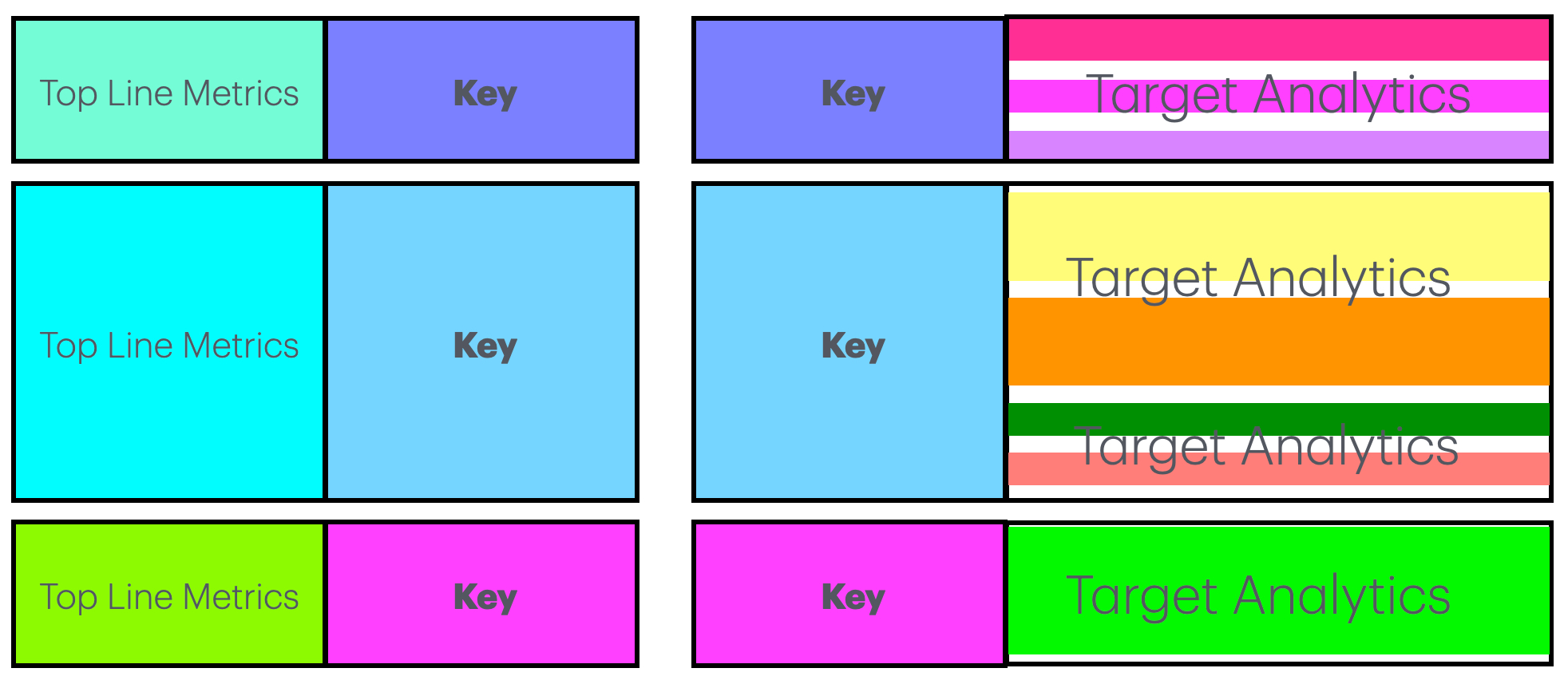
I just got hit with an idea (as ideas go). You see, I am from the world of Business Intelligence and Market Research and and idea just hit me. The setting is that data tends to be ‘humanized’, but what if it wasn’t? That is the central setting because the European GDPR has laws in place and I just thought of a way ‘around’ it. So take a setting where any MR firm requires data, but they cannot get that data because of the GDPR ‘complications’, so what is the actual issue? That doesn’t matter because Amazon, Google, IBM, Oracle and Snowflake have a way around that (Well a few more, but they do not matter). So take the next image

We have three top line population and it could be set to anyone (in that area) and as we set that population they are created a nearly unique number and never repetitive and that population gets exported, the numbers are. The MR people on the right get that number they populate the questionnaire(s) and it is send pack to the people on the left. Then that group sends out the questionnaires, the data is collected and send back to the group on the right. I reckon that this would be a nice challenge for Amazon and Snowflake I reckon. This might become an entire business unit and with privacy laws as they are placed in Europe, there might be a larger interest to seek such services. No hidden settings and all at the customers need and the consumers willingness to comply. I reckon that this might work, because as I see it, these Market Research people will see a dwindling of panel populations rather quickly in the next few years and then? Well, it would be up to them to think of a new setting, in the meantime I came up with this idea. And feel free to shoot it down straight off the bat and that is fine. As I said, it was just an idea grabbing me and as I was contemplating other venues. For that matter, how many interested parties would that bring in the Middle East and the Far East? 

Good business is all where you find it and I think I found a population and an optionally interested partner. The question now becomes can these so called ‘Agentic AI Pushers’ see the setting that is offered to them and can it pass the General Data Protection Regulation requirements? If so, we are in business. Just another idea from yours truly. Time to create another gaming IP I reckon, time to flex that grey matter under my skullcap.

Have a great day (again).

1 Comment

Filed under Finance, IT, Science

Weeds in the reeds

That is not a term you are too familiar with, but in the old days (really old days) it became important to clean the reeds of all weeds. Weeds take the nourishment away from the reeds. It seems trivial but when a farmer had to live from a one acre field the impact of weeds becomes irritating and almost damaging. It is that setting that gets us to the Guardian who gives us ‘Microsoft accused of damaging Guardian’s reputation with AI-generated poll’ The article (at https://amp.theguardian.com/media/2023/oct/31/microsoft-accused-of-damaging-guardians-reputation-with-ai-generated-poll) gives us “Microsoft’s news aggregation service published the automated poll next to a Guardian story about the death of Lilie James, a 21-year-old water polo coach who was found dead with serious head injuries at a school in Sydney last week.” In my personal view it is a populist setting by a desperate joke (Microsoft). 

Take a moment
You see, AI does not exist that is the first thing you need to realise. We do not have the technology to have AI at present. I believe in 10 years we will be able to do so. IBM has two elements that are still in their infancy. The quantum computer and shallow circuits are still not up to speed, but these two essential parts are missing everywhere. I stated before “Machine Learning and Deeper Machine Learning” are two elements and they are awesome, but they are not AI. 

The second stage is that whatever Microsoft has, it is lacking data, they don’t have enough and their data is not clean. To be stupid and tasteless to give us a poll with the three options “murder, accident or suicide”, so whatever idiot (at Microsoft) playing spokesperson with the lamest of all excuses “We have deactivated Microsoft-generated polls for all news articles and we are investigating the cause of the inappropriate content. A poll should not have appeared alongside an article of this nature, and we are taking steps to help prevent this kind of error from reoccurring in the future.

Stage Three
Stage three is painfully obvious. You see the two missing parts of any poll we see tends to be ‘Don’t know’ and ‘no opinion’, but that doesn’t fit the populist agenda of Microsoft. It wants to rock, rule and conquer and it is done emulating generals like Cadorna, Pillow, Haig, Ludendorff, McClellan and fear not, Microsoft has plenty of stupid people ready to emulate whatever they need to make their ego’s shine at the expense of everyone else.  

The second part is that any poll is set to a hypotheses and the data once verified will result in top-line numbers. The hypotheses is based on insight and whatever Microsoft has can’t do that. In addition any poll needs to be overlooked and optionally revised. This is pretty much 101 in market research. Microsoft ignored it all, just like they ignore all the usual culprits and they care only for the bottom line. That is one of the clear results that this poll gives you. So, whatever idiot was linked to “we are investigating the cause of the inappropriate content” should not be in any IT business. This should never have happened. All the issues state that their was no proper testing, no proper oversight BEFORE publishing and those hiding behind “better to ask forgiveness then ask permission” will merely assist bringing Microsoft down (and that is fine by me).
And consider that in one swoop they also diminished Microsoft Start, which is about to make it market failure number eight. To lose market share to all these competitor eight times over. How long until the core subscriptions will also lose market share. Google and Adobe are ready to take over. In one article some time ago I made mention on how Adobe could set a much larger stage. A stage where Microsoft will only have Excel to rely upon. So how do you think they will maintain their $198,300,000,000 (2022) annual revenue when they lose fight after fight being short sighted and overlooking the obvious? I will let you ponder that but the results and evidence is showing up in more and more places. So how long until others figure out that Microsoft is pretty much the paper tiger we see, we admire the origami skills that were required to fold it, but we forget that any origami can be crushed with the hand of a child. The one obvious setting overlooked by all and especially people listening to Microsoft Marketing who will claim it is the prettiest and it has the sharpest claws of all the tigers in the world. Yet in the end a small child can crush it, not entirely unlike what Nintendo with its Switch did to the Xbox series X. Once you see that spin you will realise the parts I saw appear on the edge of my eyesight 3 years ago and I have written about it often enough. So when Adobe and Google make a partnership and we see that evolve Microsoft with its Office, its Office365, the connected outages, the Exchange server security holes and we can go on for some time. It is (as I personally see it) a diversifying screw-up of the highest kind and now that players like Adobe, Amazon, Google and IBM have their ducks in a row, they can start taking over Microsoft marketshare. This will not happen overnight, but before December 2026 Microsoft will be what we call an empty egg, all shell and no substance. That was the larger danger that they opened to everyone else and I reckon that a player like India will see their own indie developers take the first bites out of what was once a great company. They merely left it (as I personally see it) to greed driven executives, their biggest mistake. So when I made reference with  the chihuahua stating “try Azure, Azure smells nice” I wasn’t kidding. We saw (a few months ago) “Microsoft’s Azure revenue is at least 25% lower than our previous estimates”, so was this fraudulent reporting (like the stuff Sam Bankman-Fried is found guilty of) or was this Microsoft ignoring the system missing part, something any market researcher knows from the get go (see Stage three). Your guess is as good as mine, but a drop of 25% is not a rounding error, it also gives me consideration why Microsoft was so desperate to partner up with Oracle. But Oracle has no master, it can optionally partner with Adobe, IBM and Google too. What it does show (to me at least) is that the Sybase engine that Microsoft bought in 1989 (I think) is no longer hacking it. It was once a contender, now it is down 25% and lagging massively behind Amazon. 

Just like the weeds in the reeds, to be an eight time loser takes a particularly creative kind of stupid. But that is just me. 

Enjoy Friday, the weekend and its 48 hour span are upon us.

Leave a comment

Filed under Finance, IT, Media, Science

Ding Dong, push it

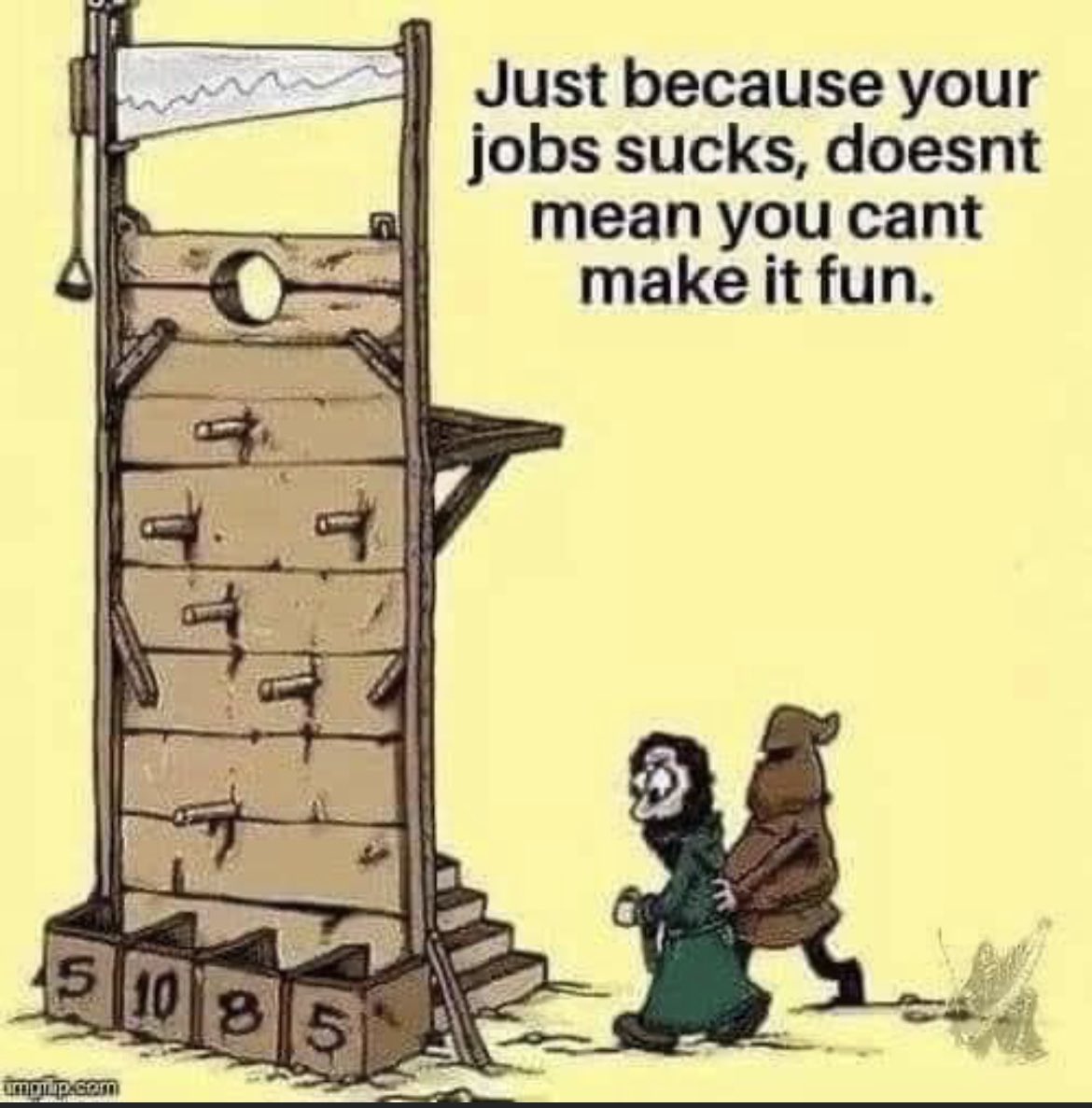
This is the stage, it is not exactly ding dong ditch, but the stage is not that far off. Some would state kiddingly “How do you tell the difference between a male door from a female door ? One’s got a ding dong and the other knockers.” Yet the larger truth is hidden here. It is a combination of anticipation and expectation. In market research it is about engagement that engagement is depending on Business Intelligence and most brands have been slacking off, they can no longer tell the difference between what the party lines tells THEM and what the consumers expect. There is a misalignment (not some Miss Alignment). The ITP (at https://www.itp.net/business/uae-consumers-expect-brands-to-get-them-report) gives us ‘UAE consumers expect brands to ‘get’ them: Report’ in this I am referring to places like the Dubai Mall. They are doing a much better job, but they are also vying for attention. That place has more than 1200 outlets and places like Louis Vuitton are vying for the attention of people also seeing Burberry, Armani, Dior, Cartier, Hermes and Prada , all in the same mall. A place that is over 12,100,000 square ft in size, so they need to get it right the first time. You see these places aren’t really competitive for people with a misers purse. When you see a person walking with a shopping bag that might not fit a sandwich, that person is likely to have spend $5000, as such he or she is done for the day. And that mall has 200,000 of visitors a day, as such they need to get on point to get their fair share. Business Intelligence is the currency that assists and here we see “According to the study, a staggering 92 percent of respondents claimed that it’s important for brands to “get” them. These findings come at a time when brand loyalty is plummeting, with 91 percent of consumers surveyed in the UAE (15 percentage points higher than the EMEA average) claiming to be less loyal to brands compared to two years ago. Nearly one in four individuals (23 percent) attribute this decline in loyalty to disappointing experiences.” I personally believe that it comes from the people expecting some kind of engagement, and to be honest, outside of the videos on the Dubai Kids Zone, I have not seen to much engagement. One of My IP solves that, but it is not mean for one shop, it is meant for the entire mall. It is the brands that require to create some level of engagement and to be honest. In all the mall walkthrough videos I have not seen any. You might wonder what that means. You see, the video walker will call attention and thus far, apart from the sensational views that the mall offers, I have not seen any. And my personal view is seen with “When asked about specific expectations, the researchers discovered that 79 percent of the UAE sample population emphasised the importance of brands consistently being aware of their purchasing habits. Furthermore, 86 percent of respondents insisted that companies should remember their preferred communication channel. A staggering 91 percent called for personalised discounts, while 86 percent urged brands to offer tailored recommendations during engagement sessions.” And consider this ‘86 percent urged brands to offer tailored recommendations during engagement’ Now there is debate on how to go about it and I reckon that this is on their marketing groups, but when we get a number like 86% it matter, it matters a great deal. I myself am on the fence, not on what is done, but how it is done.How to do cater to a Muslim population? In New York you set the Victory Secrets line in the open and the people come gushing, that will not work in Dubai. In other versions I prefer to have fun, as such the Mall could do something like below. 

Not real people of course, but the heads do not fall into a number, but into a slot with a brand and the ‘winner’ gets a small token from that brand. Perhaps to add a factor, the numbers 5,10,8,5 will be replaced by “Diesel, Adidas, Nike”, “Burberry, Dior, Hermes”, “Prada, Chanel, Cartier” and “Virgin, Sony and Nespresso” the (animated) head falls down the ramp and falls into one slot, then the visitor gets to grab one present from a barrel. An element of surprise and one of excitement. I reckon that line will fill up massively and fast. This is not the only way, some companies have their own way of engagement and they need to dig deep to create engagement, because when a place that rocks 200,000 visitors a day state that 86% of them had a less than great experience, it is time to evaluate what you are doing and the images below show great views, but it is lacking engagement. So why is that? And don’t think it is one shop, Louis Vuitton and Virgin both rock the view, and lack the engagement as far as I can tell.

So how to get the attention?
This is a much harder question, it is how to get them and that has been a life long struggle right from the bat. Customer engagement starts at one point and goes around towards what grabs them and Market Research is about masses, engagement is about that person, as such BI needs to evolve into new areas of engagement and that is the rub, how to go about it? The study gives us “The study revealed that 86 percent of respondents (15 percentage points higher than the EMEA average) considered it important for brands to provide a customer experience supported by the latest technology. Similarly, 85 percent (21 percentage points higher than the EMEA average) expressed their likelihood of being more loyal to a brand that invests in technology to enhance the customer experience.” And yes a TV screen creates more engagement, but at the Virgin Megastore, where were the gaming corners? 

Where are the places that interacts with people? It is not merely the best TV or the best screen size, it is what grabs a persons attention and there places like Adidas could benefit by adding a sport element in the store, it could benefit by having a place like Hermes open a creative corner. 

Consider buying a pyjama. One of the dreariest acts I ever face, but what happens when you can create your favourite pyjama (optionally in a more privacy setting)? It seems that the Arabic world is all about sports, as such what happens when you get to create your next polo-shirt based on YOUR favourite team? The Dubai Mall sports two Hockey teams, so why aren’t brands using that for more interaction? They might, but I never saw it. If the world of consumers is about engagement, the lack of attempts is equally staggering. You see, one of these walk throughs would have shown something. And it wouldn’t need to be ‘horrific’ like feeding a mermaid to the sharks, but between doing nothing and doing something horrific is quite literally an ocean of sand. So when this all starts with data, how is it captured? How are people engaged in this stream? That is equally important a side to manage correctly and even as I like the article, we see nothing on that. Especially in the UAE where tourism is at an all time high. What separates the local shopper from the tourist? It is not always clear and I believe that Harrods had its own set of problems in the 90’s. And when you have a study that boasts “21 percentage points higher than the EMEA average” I personally believe it matters a great deal, but the first observation is clear, there is seemingly a lack of engagement in the UAE (specifically the Dubai Mall). Oh, and this is not all me, places like the TRO group have been rocking the  Omni-Channel Advertising for well over a decade and they have been showing that there is power in engagement. So it is not just me, there are expert voices all over the place, but the larger Market Research and marketing community doesn’t know how to interact in an engaging sphere, as such they do not touch it. Yet that might merely be my view on the matter.

Enjoy the day and take the time to smell your cup of coffee, because that too is engagement. 

Leave a comment

Filed under Finance, Media, Science

The unplanned story

That happens to us all and there are any number of reasons. I thought I was done with the subject for now, that is until CB gave me ‘Nordstrom Canada will launch sales at its closing stores starting Tuesday’ (at https://www.cbc.ca/news/business/nordstrom-canada-liquidating-stores-1.6784540) about 11 hours ago. There was no surprise. I covered this in part in ‘It as one keyword’ (at https://lawlordtobe.com/2023/03/04/it-was-one-keyword/) and that story links to a few others. I casually captured the folly of Nordstrom but I left a few things out. You see, we can all agree if you have been working from a place of loss from day one, there is a weakness in your business model, but I do not think it was enough. Covid was too unexpected and the world reeled on it, but it was already to late as I saw it and even if my IP was accepted by the right people, for Nordstrom it was already too late, it would have merely given them a little more time, time they could not hand them a better result. Their business model and their prediction model was off by too much.

You see, to see this we need to look at a picture. The picture is below. 

As you see here, we see a mall and this time around it is not the Toronto Eaton Centre, this is the Hyat Mall in Riyadh and it show the same weakness, which is the problem for malls. Yet as I see it, the problem is a lot bigger for western malls (USA, UK, EU) they have the same touch, the tough of non identity. You can scream the name all you like, but these malls are all the same. Go to a mall anywhere in the US and you could not tell where you were from walking there. It was a formula that malls were based on and between 1990-2015 that made sense, but after Covid the world changed and that is where the problems starts for these malls, all 116,000 of them. Yet there is a solution and both Gucci and Tiffany is already tapping into that, but I reckon they are missing part of it and that is where Google, Samsung and Apple come in. I wonder if these two players figure out what I saw over 6 months ago and it is a juicy one. Optionally Elon Musk could use it to give more needs to his Pi Phone but in itself it is still an android solution. The image is based on identity and interaction. You see, that need is not effort, it is engagement. Market Research (at least a few of them) have seen that engagement is the metric that really matters and Augmented reality is the core of that and that is what is missing in malls. Lets be clear, for Nordstrom it is too late, the question becomes will malls change into retail graveyard places over the next 5-10 years or are they given a new lease on life and that matters. How much real estate is in 116,000 malls? When they die the local places will light up and I personally am a firm believer in ‘Support your local hooker’ which was an expression we used in the 70’s. 

So am I right because Gucci and Tiffany are tapping into that idea? No, I believe I am right because the nature of the beast (the consumer) has changed and is still changing. They are catching on that a new prerogative is required and AR gets them there. So when they are done with ageism and other forms of consumer categorisation, they will figure out that their predictive model is wrong on a few levels and that is where we see the larger stage change. I merely wonder if some of them will wake up in time. If not, I watch it all go to hell and when it does I can point to my previous articles and tell them “Told you so” and whatever excuse they have will not hold up, because I wrote it months ago and I wrote it in several stories over a span of about a year (perhaps a little longer). So when they wake up, I wonder if it is to the board directors who are fed up with the colour rd in their books, or the conveyancer trying to measure up the place for new usage. I can’t be to the smell of coffee, because it is too late for that and it will not be to me as Amazon, Apple and Google all decided they never needed me. Fine, whatever.

So when we complete the consideration of “In approving Dacks’ liquidation request, Chief Justice Geoffrey Morawetz agreed, saying Nordstrom is facing a “difficult time, but this process is unfolding in a very co-operative manner.”

At least I kept it out of the hands of Microsoft, not a bad stage to consider. Yet consider two final things. The first is Nordstroms liquidation actual liquidation or euthanasia? The second is, is Nordstrom alone? How many other places are on the brink of really bad times in the next 5 years? 

Have a great day.

3 Comments

Filed under Finance, Media, Science

The Wheel (reinvented)

I happened to stumble upon 9 to 5 Google, with all kind of non-Google news. The article (at https://9to5google.com/2021/06/25/bandwidth-xbox-game-pass-and-amazon-luna-announce-july-2021-game-additions/)

We see titles like:

Banjo-Kazooie: Nuts & Bolts
Tom Clancy’s Splinter Cell Conviction
Saints Row The Third: Remastered

Some of them are really great, but I am missing something, a new dawn, an actual new dawn, a setting we have never seen before. I am a little bit surprised, none of them have anything really new. I am not talking about new games, new titles, new originals. I am talking about a new stage of gaming, cloud gaming made it possible, so what is stopping them? I even dropped a few ideas in previous articles (go look for them). Cloud gaming allows for a new stage, so why do we see the same stage props that we saw on PS2, PS3, PS4, Xbox, Xbox360, N64, Wii even Nintendo Switch. Cloud gaming allows for a different station a larger setting with optionally a private set social media option, none of them are going there, they all seem to be much more relaxed in reinventing the wheel. None of them show us a station that is actually new. Perhaps it is still to come, but it is day 1 where you show that you are not the sheep or it’s herder, you are new, you are unique. So why do they not see that option? I am pondering it, I actually do not know. But to see some level of herd mentality is a little disappointing. Will it be up to Netflix to teach them that? 

The Amazon Luna has a refreshing amount of new games, yet there is an overwhelming presence of Ubisoft, not that this is bad. There are plenty of titles I never saw before and that is good, but so far cloud gaming shows more of the same, nothing refreshingly new and that is a disappointment. And with Luna starting at $6 a month and Ubisoft+ at $15 a month Amazon will soon need to reconsider what they have (without Ubisoft) and see how they are different from Google, Microsoft and Netflix. Being different is at times scary and it does have its own unique set of challenges. Yet we have seen how exclusive games make a console, Xbox proved it, Xbox360 continued it, Xbox One wasted it. Playstation 1 through 5 have shown that exclusive games make the difference and Nintendo did this as well. Now consider that cloud gaming is more than a console, it offers a few unique settings that others cannot offer, the cloud gives the makers a unique advantage, so why was this not drilled on? Why was that source not tempered into a powerhouse? 

Cocoon (at https://cocoon.com) shows a ‘new’ kind of social media, not unlike what Google Plus offered. It seems that none of them adjusted those two ideas in a stage where the gamer can talk to friends, can optionally open up to talk to fellow gamers of a game. All options were there and it seems no one took that. No one took the idea that games can have a larger impact on more settings and it seems to me that these makers are all about others doing the work and no innovation comes forward. Achievements can be traced back to 1982 (Activision) and we have seen the evolution on systems, yet as far as I can tell no one in cloud gaming land had the idea to evolve that into something more. It was the Xbox360 that had the last evolution, it was Ubisoft that reinvented the badges and none of them took it to the next step, so why would anyone consider cloud gaming when we see: “Cloud gaming enables you to play games on devices you already own, without the need to purchase a gaming console or gaming PC” yet if we already have a gaming solution, why go there unless it offers more and in this I do not mean the same games and more games. Cloud gaming needs more and so fr I see none of this happen, I left the ideas months ago and so far none seem to be clued in on what others seemingly throw at their feet. At best we are most likely to get a ‘we are looking in that direction’, which is like marketing telling Jaguar that they are waiting for more customers, it is innovation that drives a system to customers, when innovation is absent the customer merely looks form a distance and considers ‘I can already do that. It is innovation that drives the games, the hardware, the technology and from there the customers flock. Yes there is an equal chance that they distance themselves, but the true innovator can see the chances that are out there. So what is keeping them?

Consider that we see Ubisoft+ at $15 a month, yet on consoles Amazon (the dot com version) offers the Division for $10, The Division 2 for $13, for Honor $12, the Crew $15, Black Flag $11, and in this case the subscription only pays if you pay more than one new game every month, so how long until the mediocrity of Ubisoft games (and its glitches) gets to you? Yes, it seems interesting when you consider the latest games, but still, you break even in month two, after that the cost continues and any delay will set you off, that is the setting we all ignore and their marketing hopes we ignore it. And when we take notice of Android Central and with “Ubisoft is dedicated to cloud gaming, specifically Stadia and Amazon Luna, and that was reflected in numerous announcements”, so what happens when they service the consoles, PC’s, Stadia, Luna and xCloud? What happens when patch after patch is required? How happy will you then be? This is not on Ubisoft, this is the cost of doing business and I expected that Stadia and Luna were ready, yet all I read is that there is a ‘more of the same’ approach and games alone will not get you there. Luna has a fair amount of titles that I see nowhere else and as such they have an advantage, but none of them took the environment to the next level and that is a bit of a disappointment, and there were options. There were ideas that I (others too) threw out there for them to pick up and they did none of that. Perhaps it is not the mission statement (which already cost one firm billions), perhaps it was not their technology, which shows us that they were optionally not ready and there was no brainstorm on what else is possible and that is the foundation of ANY game. 1984 gave us (unknown to George Orwell) Elite, Ultima, Archon, Spy hunter, and Lode Runner. Some of these games still have a following today, some of these games reinvented themselves (Elite Dangerous is the most visible one). They all set a new standard, the hardware evolved and now we see the makers of that hardware show us that they can do it using our PC, MAC, Console. But they had the option to give more and they seemingly neglected that.

New hardware that brands ‘itself’, yet they ignore the path of awareness. When we look at awareness, perception, and cognition we see mere words, but any market researcher will look deeper and the makers of cloud gaming seemingly learned nothing, not even from their marketing department. Perception without awareness, cognition without perception and awareness with no lead towards cognition. Three elements that they do not connect but that is the larger mistake, one leads to the other. It is almost a Pokemon setting water beats fire, grass beats water and fire beats grass, yet what do we get when we reverse that? No one looked at that part and in the Pokemon setting it does not really work, yet in consoles we see what lacked (even though there was a hidden hint with Sony) they never pushed through, now cloud gaming has the opportunity to make it all a reality and it seems that they are not doing that. Perhaps Netflix will and make a clean sweep, or perhaps Nintendo will. We cannot tell, but the one that does will have a massive advantage, a place where others seemingly dreaded to go, and now that setting changes the game completely. Yes number one and two will remain the positions for Sony and Nintendo, but the number three (most likely Amazon Luna) is not secure, so the one who innovates the cloud the most will head for position three with the option to gain and optionally overtake position 2. Will that happen? I cannot tell, because Nintendo has been innovative and it has a massive advantage, even before their second version is out. Yet personally I feel that one thing is clear. More of the same will not hack it, not in this economy of people trying to pay their bills, unless there is a massive upside the consoles will remain the largest players in game land. That part is almost certain. There is a clear space for cloud gaming, but not in the ‘more of the same setting’ not for 1-2 years to come. 

Leave a comment

Filed under Gaming, IT, Science

Market(ing) Research

I was made aware of a picture that has been around for some time, it is an optional strong image and it can be used in any direction. The byline that was given was “I’m blown away that this diagram made it into a major publication” I personally agree!

The image is what I would call a 2 by 2 image of a clusterfuck that goes nowhere and openly misinforms people. The more important part is that it is based on truthful observation and that is where the cog tends to upset the machine to a much larger degree. It has two rows (very useful and not useful), two columns (Time consuming and not time consuming) and the 4 elements are labeled “Plan, Learn, Ignore and Browse”. So far one would think that it makes sense, yet the image has in each of the 4 elements:

Plan (AI, Machine Learning, Information security andStatistical Programming), Learn (Data Science, Data Visualization, and Business Intelligence), Ignore is for (Predictive analytics, Mathematics, Statistics and Data Warehousing) and Browse is reserved for (Spreadsheeting, Data Cleaning, and Financial Analysis), as such we might consider the first stage, this was made for people in marketing, for people who need to visualize data to give stakeholders a story to hold onto. The idea that some consider that Financial analyses was not time consuming to acquire is a chapter we will forego for now. It is the Ignore part that gets me, You see Marketing researchers are about the story that can be served like a Tiramisu, something that goes down easily with the Stakeholders and shareholders, yet it is the mathematics and statistics that makes them want to ask questions, not something a company wants, they want them to merely eat the cake and fuck off. But topline stories are actual stories, it is the connected mathematics and statistics that gives them the power, yet in today’s market it is an expensive trip to do and many companies don’t do that well, mainly because the statistics might show another side to all this and that is not what they want to tell the shareholders and stakeholders. And consider that a larger firm has taken the time to properly set up a Data Warehouse, do you really want to ignore all that data?

In all this there is a much larger issue. The field of what was a proper Market Research field has been replaced by mere topline storytellers and we call that Marketing Research and it is as I see it  holy useless.

Topline stories sound nice, but without the underlying statistics it is for the most conjecture and speculation but without supporting finesse. It is the merchant that looks at the tally of his shop and speculates on how they will do in the next quarter, yet it is true that to some extent they can do that, but without supporting numbers (from Statistics, and Predictive analyses) optionally cornered in mathematics, it remains speculative. It is like seeing the marketing manager and sales manager plotting out ‘their’ path towards financial success and as regression was coming up short, they relied on General Linear Modelling to fill in the blanks. In my lifetime career spanning well over a quarter of a century in Business Intelligence, I have met 6 people who truly knew the proper way to use GLM (MANOVA in the old days) In the Netherlands Hans Krijnssen and Jos van den Ronden, In Belgium Jacques Tacq, in the UK Jane Moore, and in the US there are Dave Nichols and Tony Babinec. I am not a mathematician, I recognise proper usage, but I cannot use these procedures properly myself. There are more people who know it, yet I met 6 over a term of 25 years, this is a limited field, it comes in various shapes and sizes, but they all have degrees in mathematics, it sets the analysts apart from the marketing researchers. We have become too reliant on short term goals without the essential need to have a long term direction in mind. Most companies took the bait when they were told that short term planning is the moneymaker, but there is also the need for long term planning and testing, I might think short term with my IP sale, but I am up against long term strategists who do think outside the box and that is where a lot do not wish to be, they cannot make the long term turnover, their sales training with their pipeline is all about quarterly growth and achieved sales trajectory, the image merely enforces that view, yet the larger view needs to come from what they would happily ignore. It comes down to the old story, The analyst shows you the essential path, whilst marketing is set like a politician, they make you yearn for the invoice. This now translates into marketing handing you the invoice and the numbers feeding that need for purchase are and remain absent.

How is that solving your need?

I believe that Marketing Research is the most dangerous of approaches in the near future, if they go about it with their limited topline reporting tools, someone up high will ask that one question that cannot be answered and it all falls to pieces, it will do so eventually when the storytellers rely on the short story and the process goes south too fast and the numbers will not give the shareholders any confidence, because that will happen a lot sooner than most sales people are happy with. Let me be frank, there is a market, an essential market in these topline presenters and their software tools, they take away the loads of effort and the required approach to get there, but by themselves they are not a solution, they are a supporting tool and that is where a lot of players go wrong. 

So yes, there is also the stage where the image is supporting a different text, but overall the image shows a lack of insight and a support track towards what I would call ‘deceptive conduct’ or to state it slightly less diplomatic ‘relying on misconception to sell a view to a sale’ approaches that go nowhere in the long run, especially when the people who should ask questions, actually start asking the questions that are implied to be answers, all whilst they are no such things.

Leave a comment

Filed under Finance, IT, Media, Science

Brotherhood of Heineken

As we stepwise push forward towards 5G, we think that it all stays the same, it will not. A few parts will change forever. Google has an enormous advantage, yet they too are now pushing for different changes, changes that they had not seen coming a mere year ago. In this case there is no direct link to my IP, so I am happy to give you all the inns and outs of that part (pun intended).

To start this we need to consider a few sides, all with their own premise. The first is the focal point:

4G: Wherever I am
5G: Whenever I want it

That first premise is a large one, it is not a simple localisation part, it is all about getting access at a moment’s notice, yet what we need access to changes with the push we face. The initial part is the creation and the impact of awareness. As we re-distinguish ‘awareness’ the metrics on awareness will also change and for the first year (at the very least) market research companies on a global stage will be chasing the facts. They have become so reliant on dash boarding, Tableau, Q-view and Q Research Software will all have to re-engineer aspects of their software as they fall short. Even the larger players like SAS and IBM Statistics will require an overhaul in this market space. They have been ‘hiding’ behind the respondent, responses and their metrics for too long, the entire matter when the respondent becomes the passive part in awareness is new to them, and that is all it is, it will be new to them and the constructs that are behind the active and passive interactions will change the metrics, the view and the way we register things.

Google has the advantage, yet the stage for them will take a few turns too. Their initial revenue stream will change. Consider the amount of data we are passing now, that amount also links to the amount of ads we see. Now consider that everything in 5G is 10 times faster, yet 10 times more ads is not an option, so they now face revenue from 10% of the ads compared to what we see now. In addition to that, as we adjust our focus on the amounts we face implies that more advertisement space is optionally lost to the larger players like Google and this too impacts the stats for all involved. Google will adjust and change, in what way, I cannot tell yet, but the opposition is starting to become clear a in this example we see Heineken, a global established brand who now has the option to take the lead in 5G awareness.

Introducing

Ladies and gentleman, I am hereby introducing to you the Brotherhood of Heineken, in this fraternity / maternity, we invite all the lords and ladies of their household to become awareness creators towards their brand. In the Netherlands thousands are linked through a company like Havenstad and similar operations, this stretches through Europe and all over the place going global. These lords and ladies can earn points in the simplest thing, by setting a stage for Heineken to spread the message, we see that the initial power is with the consumer to support their brand. Awareness and clicks are converted to points and that leads to exclusive offers and rewards. Consider the unique stuff that Heineken has given to its professional public now for all to get, to buy and to earn. Bags, coolers, clothing, accessories. For decades we saw the materials created and most of us were envious of anyone who had that part others did not, now we could all earn it and because Heineken (Coca Cola too) have created such an arsenal, these players could take the lead in pushing their own awareness to new levels.

Now it is easy to say that Google is already doing this and that is partially true, but that equation will change under 5G and these really large brands could pay a fortune to Google or take the lead and create their own powerhouse and in this day and age that powerhouse will become more and more an essential need. Anyone not looking and preparing to this will hand over opinion and choice to Google and watch how that goes, yet consider that some sources gave us a quarter ago: “Google will remain the largest digital ad seller in the world in 2019, accounting for 31.1% of worldwide ad spending, or $103.73 billion“, now consider that they need to grow 20% quarter on quarter and that in two years that metric has changed and as such the ads could cost up to 30% more, now do the math on how YOU will survive in that environment.

Samsung, Proctor & Gamble, Coca Cola, Nike, Heineken, Sony, Microsoft will all face that premise and that is how it all changes. As we see that the metrics will have reduced reliability, the market research players will need time to adjust and in that lull a player like Heineken can create its own future and set its digital future in another direction to exceed their required expectations. This step seems short now, but as the stage alters it becomes an essential stage. Google may remain in denial and oppose that this will never happen, but the data and metrics are already suggesting this path and that is where we are now; the option to be first or pay the invoice, what would you do?

I believe that the visibility starts to get a little focal just before 2020 games, and it is in full view before the 2022 Beijing Winter Olympics, and in full swing by the time the 2022 FIFA World Cup in Qatar starts. These two are close together and the people will pay through the nose for that visibility, especially the European parties in all this. I expect a more evolved 5G advertising stage via apps as well, seeing ads to unlock premium view and data is likely to happen, all this is coming to us and our view of advertisement will alter to a larger extent. We will be told that this will never happen, it is not how they work, yet they are deceiving and lying to us. Consider that change in the last 25 years alone, in 1994 advertisement through printed medium and TV was at an all-time high, they all claimed it remained this way, within 5 years that stage was already changing with online ads to some extent and the slowing of printed medium, in addition the international channels would push into national advertisement. A mere 5 years after that (in 2004) it started to take off in earnest and would increase revenue to over 100% in the 4 years that followed. Between 2005 and 2017 that would push from $6 billion to 26 billion, do you really think that their words holds true? To keep that growth and their need for greed the metrics and approach has to change, there is 0% chance that these players will accept a growth of data based impact of a mere 10% of what is was in 4G, there is too much riding on this.

For the largest players there is an alternative and it will not take long for them to set the stage to this and start finding their own solution to keep awareness as high as possible. If you have to pay through the nose to keep awareness or create the environment to reward achieved awareness, what path would you choose?

Let’s not forget players like Heineken did not get to the top by merely offering a really good product, they offered a lot more, a view, an awareness that all embraced; Sony learned that lesson the hard way by losing with a superior product against the inferior competition (Betamax versus VHS). 5G will set a similar yet new battle ground and for the most the media is seemingly steering clear for now.

That is with the nice exception of Marketing Interactive, who gives us (at https://www.marketing-interactive.com/going-beyond-the-big-idea-creative-leads-on-5gs-impact-on-advertising/) “There is no denying that the rollout of 5G will change storytelling and the consumer journey“, it is a true and utterly correct view. They also give us: “creatives need to evolve from old habits and stop hiding behind “the big idea”. “We, as creatives, need to evolve from old habits, stop hiding behind “The Big Idea” and evolve our creative process and creative structures to be based on this new digital reality, to create content based on this new innovative context“, this is the view from Joao Flores, head of creative, dentsu X Singapore and he is right. We also get “For agencies, the opportunity calls for unorthodox alliances to make sure our creativity is the beating heart of this quiet revolution“, which is true, but it ignores the alternative path where the largest players start getting this path in house and in light of the two revelations, we see that during the last decades players like Heineken had been doing just that and that makes them ready to take on the 5G behemoth and push the others into second place or worse. There is a need to have expertise and many do not have it, but in that Heineken has been different for the longest times. It is most likely due to the unique view that people like Freddie Heineken had on their market and consumers. You merely have to realise that they were the first to embrace ‘Geniet, maar drink met mate‘ (enjoy, temper your drinking) it was a slogan that came into play around 1990, as well as ‘Drink verantwoord. Geniet meer‘ (drink responsibly, enjoy it more). All pushes to set a better stage, it is there that we see that a new push could be produced by players like Heineken.

We see so many more paths opening, but in all this the one overwhelming side is not what paths there are, but the stage of metrics that they all rely on, as such having control on the expenses as well as the foundation to create a reliable stage for their metrics will be a first soon enough. Not merely: ‘Who is your population?‘, it is the stage where the passive and active awareness can be differentiated on, that too will push advertisements and the applied visibility through 5G apps and 5G advertising and how the funds are spent, that will be the question that impacts player like Google Ads on the next 24 months, because if they do not do that, their quarter on quarter growth will suddenly take a very different spin, and they are not the only ones affected.


Leave a comment

Filed under IT, Media, Science

In the back of my mind

Today is not the same as yesterday. Yes, the same issues are playing still. They will remain an issue for some time to come. Whether we look at Yemen, Iran, Grenfell or the Saudi Consulate at Istanbul, the media has decided to make this a long term event. Some events cannot be resolved easy or quickly, that is merely the stage we find ourselves in and as such I accept that. It was this mindset that was awakened rudely by a thought that I have had for the longest of times. Now, this is pure speculation and perhaps it is all utter BS. I accept that, yet it remains in the back of my mind, it will not delete itself from my thoughts and this morning it woke up again as I read the headline ‘Yes, I ‘cheat’ at video games – it’s half the fun‘.

I respectfully disagree, it just ain’t cricket!

Yet the thought has been there for a while. You see, the latest adult generation is different. It partially grew up with that thought. So as we read the article by Stephanie Munro (at https://www.theguardian.com/commentisfree/2018/oct/19/cheat-video-games-gaming-performance), we get a little more than we bargained for.

The cornerstone here is: ‘some games are worth a bit of cheating‘, we can agree that this is a thought every gamer has had, but I believe it transcends gaming. I believe that game makers have created the shits that audited Tesco (and devaluated it by billions). The people willing to quickly skate around the edges of Market Research to create a story that fits the bill, yet when we dig into the data, when we consider the weighting used, we see another issue. Some of these stories are more often than not, not worth the paper they were printed on. More importantly, the people mentoring these ‘younglings’ making (as a mere example) are achieving linear correlation by plotting two points. Even as they know that straight-line relationships between two variables can be achieved, they sometimes forget to tell them (implying that the newbie should have known) that it takes more than two observations. Yet a mentoring position is not about assumption. Even as reality is not this far-fetched, we see that there is a stage that counts. TU in Norway is one source giving us the most common example of unethical behaviour. It is: ‘Taking shortcuts / shoddy work‘ and it scored 72%, which is huge! I believe that there is a growing group of people relying on making deadlines and the entire issue is found there. It will almost always be on the new kid, getting advice left right and centre and not getting proper mentoring. Even when we see some parts not being violated, in some cases we see extreme examples of weighing data where weight values of well over 25 are achieved, an issue to be sure (when the population was increasingly small and unbalanced).

And here is where the shoe becomes too tight for comfort. You see behind this is the ‘golden rule’: ‘It’s important to realize that what is unethical may not always be illegal‘, it is a dangerous truth as it can at times be both.

Now this reflects back to the gaming article.

The quote: “I wonder whether cheating at video games is really anything to feel bad about. While downloading unverified cheat programs and exposing yourself to malware is not something to encourage, there are wider and greyer areas of game manipulation that deserve consideration“. There it is! The intentional push to consider cheating! We have all taken shortcuts; some are glitches within the game. Some are merely flaws in game design, the other part is exploiting a gaming bug and then there is God mode. God mode goes back to the beginning of gaming. A code that will set damage received to zero, or perhaps usage is now staged to a decrease of nil and the final part where build time and cost are set to zero. These are all stages that give you an immediate upper hand in the game. The codes tend to be there for testing purposes and were in the older days never removed, in some cases they still are not. Yet when we see the application done in Business Intelligence it becomes a different issue altogether, it has impact and it is too dangerous at present.

When we go back to Tesco in 2014, the Guardian gave us two parts. The first was: “what has already come out raises profound questions about how one of Britain’s biggest companies allowed itself to be run questionably – and about the role of its auditor. The making up of the profits figures was not in a report signed off by PwC. That happened in August – three months after PwC had given the supermarket chain’s figures a clean bill of health. Even then, it noted that there was something potentially funny with the numbers, and expressly warned about “the risk of manipulation” – but allowed them to pass anyway“, and the second one was “The audit is a key part of the scaffolding of shareholder capitalism. It is one of the primary ways in which investors, business partners and regulators can tell the true state of the company they are dealing with. If you can’t trust the audited accounts, you can’t really trust anything. This is why the vast bulk of public limited companies – and hospitals and charities – are legally obliged to submit audited accounts. And the vast bulk of those are done by PwC or one of the other Big Four auditing firms“. Now we get back to the gamer side. The bulk of people now becoming CPA have a gaming life. Whether they stay in the console closet is up to them, yet in a healthy life gaming will be part of it. It is a social interaction or perhaps a challenge to be among peers and see if you can Fortnite the hell out of your buddy and Overwatch him/her to death at the same time, nothing wrong with that. Yet we see more and more that the stage of normal gaming no longer suffices and we start relying on glitches and weaknesses, which is not altogether wrong, but when we knowingly have codes that give us 10% more, what then?

Gamers are actually getting pushed into that frame of mind and the industry as a whole loves it as the person willing to take every legal shortcut is a revenue asset, yet is it a long term solution and what happens when the border of legality was a grey area altogether? Consider the impact of Tesco, the most visible case in the last decade. And that is when we get to the 2017 New York Times (3 years after the event). Here we see: “The regulator said that finding did not suggest that any of Tesco’s directors “knew, or could reasonably be expected to have known, that the information in the August trading statement was false or misleading.” It did note, however, that there was knowledge at a sufficiently high level below the board as to the false and misleading nature of the trading statement to constitute market abuse under British law.” That is now the ball game. The two points ‘could reasonably be expected to have known‘, in opposition of ‘there was knowledge at a sufficiently high level below the board as to the false and misleading nature‘. So someone got a massive raise, someone got an overwhelming promotion and no one went to prison. This is what I would call an orchestrated cheat. When we look at PwC and we see: Tyco, Tesco, Taylor Bean & Whitaker, Bank of Tokyo-Mitsubishi and MF Global. All stages that are massive and all stages where in the end it is merely about the fine, the pressure for using ‘cheats’ is increasing and it seems that the gaming industry is banking on this. What is more appealing when an almost impossible task is achieved by someone who should not have been able to make it to level 2?

This is where Stephanie gives us the gem: “In the world of competitive sport, the line between a so-called clean win and one in which the performance of an athlete has been chemically enhanced is blurred – but we leave it up to governing bodies to decide what’s acceptable and what’s not. This leads us into the moral quandary of whether something being legal makes it acceptable“.

It is the moral quandary that is the switch, which is no longer an on and off switch, but a level that goes from 100 to zero. A lever that is pushed again and again a staged setting with online and single player achievements where we learn to do what it takes to get all the achievements, yet to keep a much more high profile stage to make us seemingly clean players.

So when we see a Battlefield example: “John is on the extreme end of a spectrum, because his tactics are so lethal, so outside of what the game’s creators intended, so far beyond what rival players can defend against and, oh yeah, he paid some hackers to have them. John pays to be able to kill your character instantly in Battlefield. He’s surely crossed some line, though it’s anyone’s guess just where that line must be” (source: Kotaku), we see the issue that is the stage on all this. This now directly reflects Apple and their mobile battery game. a conviction with a 10 million euro fine, whilst the payout makes crime a joke. The article (at https://lawlordtobe.com/2018/10/25/crime-as-a-business-model/) where in ‘Crime as a business model‘ we see: “Apple required the sale of 16,000 phones just to break even on that fine“, against “the means to sell 123 million iPhones through what the court is seen as deceptive conduct gets a fine that amounts to 16,000 units. A fine received that represents a mere 0.013% of their cost of doing business” and we see not only the progression of what should be regarded as unethical conduct, governments are actually encouraging it by giving fines that were a joke on a scale that is a mere 1% of what was done here.

So whilst we see: “For some of us, the idea of using a walkthrough is anathema, to others it is a means of bringing us back to a point where we can have fun. I’ll admit that I never completed the Ocarina of Time. It was too hard and I got bored. I’m sorry, Princess Zelda, I abandoned you“, we ignore that Ocarina of time is one of the best designed and most overwhelming puzzle journeys ever seen (I never got to 100%), the exclusivity of getting there is merely brushed on and the cheaters are given a pass. That is actually beyond the point where those with a gaming guide are not really cheaters, they merely walk the journey to get to the 100%. Apart from Ocarina of Time, there is Metroid Prime. A game I worshipped almost forever, I ended up only getting 98%, which is an achievement I was proud of (I never found all the missiles). And I played it a few times, loving that journey again and again. Yet the BI industry is merely hiring those with a 100% score and they had no interest how the player got there and that is actually the sad and worrying part in all this. Wall Street does not care how the revenue was achieved as long as it is and that is a much more dangerous setting in the upcoming future. To get the required numbers some analyst proclaimed no matter what. And when it is revealed in some scandal and the media is all over it, it is the mere ‘could reasonably not have been expected to have known‘ is what keeps the board members out of their well-deserved Rikers Island excursion (3-5 years). This sad evolution is not merely the creation of another Star Chamber, an old reference to a tribunal abolished in 1641, where we saw the king in council exercising criminal jurisdiction. It was inquisitorial, and torture is believed to have been used, with no accountability in any way shape or form. It is an upgraded system, evolved from those settings that allows corporations to do whatever they need to appease Wall Street and other financial centers, to exceed analyst expectations, whilst we see that these findings are increasingly becoming more and more unrealistic because that is what the market needs.

In all this holding these analysts and their formula’s up to scrutiny and accountability in the long run will not happen, making the need for these players to find the people who are willing, not to bend the rules, but to cheat their way across, increasingly more and more important to corporations and as such, the danger is that we get into a world where cheating is not half the fun, it is merely the only way to keep ahead of the curve and avoid being classified as no longer relevant.

When did we sign up for those values in our lives?


Leave a comment

Filed under Finance, Gaming, Law, Media, Politics, Science

Burning out your life

Yesterday’s news in the Guardian is skating on an interesting side. Yes, there are more games awards coming, there are new releases and there are all kinds of events coming into play. So when I read ‘Crunched: has the games industry really stopped exploiting its workforce?’ (at http://www.theguardian.com/technology/2015/feb/18/crunched-games-industry-exploiting-workforce-ea-spouse-software), I read it with a different set of eyes.

The first part is “EA relied on vagaries of American law that classify some IT professionals as exempt from overtime pay. The settlement in the second case featured a quid pro quo: employees would be reclassified in order to get overtime but would give up their stock options“, I can guarantee you that I have been in the same set of shoes, Market Research is at times as caring as a steamroller driving over Miss Daisy. It is nice to see the claim ‘stock options‘, yet that flavour of reward tends to be for the managers and the heads of development, not for all the programmers. They tend to get an evening of free food and booze. Take 35 programmers each having done 100-250 hours of extra time, getting paid off with a $300 meal, works out great for the manager getting his 25,000 stocks at $0.50, not so great for others. I am not stating that this works exactly like that in gaming, but I have seen it in other areas of software.

The most common theory is that the industry is simply too young and too fast-moving to integrate proper management techniques. “Our project was huge and our overall quality assurance process at the time was very basic and waterfall-esque,” recalls one quality assurance worker at EA“, is the second part. This has been shown in several games of late, if we look at the flawed releases of 2014, we can clearly see a lacking scale of QA. It then refers to the work of Fred Brooks on how company size influences efficiency. There is no denying that. Proper management is required, especially when the group grows faster than projected. A special mention of the honour guard must be given to the Marketing department who then also changes the timeline, to get that extra revenue, like marketing COULD have figured that part out at the very beginning. All this will add to the burden of quality delivery and the stress of the workers.

This quote is important, as I consider this to be a stronger part of the sliding quality scale “I was a quality assurance tester at Rockstar, and at its worst, we worked 72 hours a week“, a decent reason for quality to slide (irritating that Rockstar still pulled of a 90% plus rating, although they had a few start-up issues), especially when you consider the following quote “if you had issues with it, you were told ‘Well, you can go stack shelves at Tesco instead or answer phones at a call centre’. You were treated as disposable“, not an entirely unknown event for some in the IT pool. When we consider ““Developers and managers should never have to work more than 40 hours a week,” he says. “It’s a fun job, but it shouldn’t be an exploitative one. Everyone has a life. Let them live it, it’s short enough as it is”“, that sounds partially as a solution, but only if it affects the entire range of staff.

I personally see this all as a reason on why there has been a sliding scale of quality. Is there a chance that Ubisoft has been on this track? This is NOT an accusation! You see, too many hours result in burnout, burnout influences creativity and resolve, crunch time, might give a little extra resolve, but in the end it costs more then it brings. I think that the power of innovation will always win, if balance and rest (to some extent) is made available to revive the soul and the mind.

I think that the next quote sounds nice, but is it enough? “Over the past 18 months, EA has been making significant investments in new quality assurance tools and automation technology, implementing ongoing testing right from the beginning of game conceptualisation. These changes are ultimately improving game quality, as well as reducing the need for the crunch periods”. These tools need proper implementation, they need proper assessment and the people need to properly use them. It tends to add a strain to all levels for a little while. More important, it is only one side of the game (pun intended). For example Mass Effect 4, the engine, the locations, the interface, all are under stress to be made. What if a solution throws the gaming experience? What happens then? What happens when the initial reception is ‘average’, what will marketing do then and more, what will the size of crunch become at that point? You see, the article ignores one little part. For all intent and purpose, games tend to surf at the very edge of technology.  In some cases the makers will attempt to get the max of a system that is at times a little buggy and when you try to use 99% of the system, things tend to go pear shaped really fast. We can offer that the danger of being over ambitious is a bad thing, but this is how some games came into existence. The very first Unreal and Unreal tournament were both chartering the maximum of graphical capability when they were released. Some people invested hundreds of dollars to get a Diamond Labs Graphics card to get the maximum of the game. This is only the tip of the iceberg, when we see consoles there is less manoeuvrability, yet getting the maximum of a game has never stopped the developers. That part is not addressed and that part is every bit as important in dealing with the timeline and QA of a game.

Yet, it is not as much as it was (or so they say), but making the great hit at the E3 or another main release date is the main drive of crunch, especially when the final piece of the development puzzle does not quite fit. That part might be addressed in the management charter, but we must also be realistic that a great game takes time to develop, which made a statement given by Ubisoft “We are able to offer people a new Assassin’s Creed every year because they want Assassin’s Creed every year” nothing more than a joke. Especially if they wanted to rule the gaming industry. In addition I would like to raise that the next big thing is supposed to be ‘No Man’s Sky‘ which will arrive in 2015. We must realistically anticipate that the hype gets away from us all, but it is still seen as the big thing. It took several years, which gives additional view to the hilariousness of: “Ubisoft: No Annual ‘Assassin’s Creed’ Would Be ‘Very Stupid’“, it is such an issue because true innovation takes time, consider on how certain glitches had been around in AC2, AC2B, AC3 and AC Revelations. I can understand that some of these glitches were around in the second game, but to still have those issues 2 games after that is just a laughing matter. There is a reason for me to mention Ubisoft, not because I am ‘so’ against them (I truly am not), but their track record speaks for themselves. So will 2015 be an EA year? That part remains to be seen, however, as I see it at present, there is enough indication that Ubisoft had been hit by burnout staff (assumption on my side). Will a change of atmosphere give us better games? I certainly hope so, because games thrive on the creative and innovative mind, a state that crunch time seems to destroy. This is not just my view, there are loads of views out in the open, some scholarly, some less so, most of them all agree that crunch time and creativity are opposites, so why rely on it? My personal view is that in several cases, these companies (the big ones) didn’t choose the wrong style of management, they choose the wrong sort of manager altogether.

If you doubt my words (which is always fair enough), then consider which games were the true big hits and how they were made. The age old example remains the strongest one. Minecraft was never a big project, yet Microsoft regarded it to be worth over 2 billion. a simple low res game, addictive as hell is worth more than the bulk of the gaming industry, you see, Ubisoft and Electronic Arts both made the same mistake, as they ‘relied’ on a business approach with BI solutions and spreadsheets, they forgot their number one part. If a game is no fun, you lose all your customers really fast. They both made that mistake in huge ways. Both forgetting that their games rely on innovation and creativity, both have ad massive losses in that regard. Will Ubisoft recover? That is hard to say, the EA machine is claiming improvement and it seems that Mass Effect 4 will be their greatest test. EA got hurt badly by Sims 4 and Battlefield, we should also look at ‘Dragon Age: Inquisition is great, but here are 8 things it could do much better‘ on GamesRadar, because when we read that this is a 100 hour game and it loses momentum, we can agree that $100 for a game that could be played within 2 weeks is a little demotivating. It goes back to long before Infamous: Second Son (which is just one of the games that could have been legend), I think that the makers need to retrace their steps on how many hours a game should offer. No matter how good the graphics are, I finished Tombraider in one weekend, which is not good mojo money, especially when you consider that the initial edition (on PS1, 19 years earlier) took a lot longer and was riddled with juicy little challenges. Aren’t games supposed to go forward on more sides than mere graphical resolution?

So as we judge those who make the games we desire, we see that those thinking that they are pushing towards what we desire, only end up delivering a lessened product due to pressures from too many sides, not in the least pressures that they internally created. Even delays (Watchdogs and Elder Scrolls Online) end up not being solutions, in case of the Elder Scrolls, with so many delays that the latest tells us June 2015, has been the reason for many people to just cancel the order altogether. The fact that Elder Scrolls has dropped the subscription part shows just how dangerous their position has been. Here I do want to brag a little, because I came up with an entirely new Elder Scrolls almost two years ago, one that could have saved them many issues as they tried to ‘fix’ their MMO approach. Just as consoles require great games to survive, great games require the right people, people who need to be well rested to get them that golden idea that will make legend. Watchdogs did get a lot closer due to the delay, but what if the difference between 84% and 93% was two weeks of rest? That one golden idea that drove the game to legend status? Is it realistic? You see in hindsight that is all good and well for me to claim, but that is AFTER the fact. I believe my view is the right one, they just needed the right manager to inspire them a little further along, but as always, it is a personal view and it is a debatable one, I do admit to that part.


Leave a comment

Filed under Gaming, IT